

Hep B Blog

Tag Archives: HBV

Diagnosed with Hepatitis B? Preventing Transmission to Others Learning the Hep B Basics, Transmission Part II

Part I discussed how hepatitis B is transmitted and may have helped you determine how you were infected with hep B.   In Part II we will discuss the people closest to you who may be susceptible to your infection.

Anyone exposed to Hep B is susceptible. This is true if you have not already been vaccinated, or are not taking precautions. Hep B does not discriminate. However, those most susceptible to infection are your sexual partners, close household contacts or family members. Why are the these people more susceptible?  Remember that HBV is transmitted through direct contact with blood and sexual fluids, so sexual partners will be at risk. Unfortunately even close contacts without sexual intimacy may also be at risk. These include family members or roommates that might borrow your razor, the nail clippers on the downstairs counter, or your favorite pair of pierced earrings or body jewelry. Such personal items may have trace amounts of blood on them. All you have to do is keep them separate until everyone is tested and vaccinated.

Hepatitis B is NOT spread casually. You will not get HBV by co-existing in the same house, sharing a meal or eating food prepared by someone with hepatitis B. You will not get hep B by sneezing, kissing, hugging or holding someone with hepatitis B.

Hepatitis B can live outside the body for a week. It just makes sense that the odds of an exposure are more likely with someone you live with just due to the increased potential for daily exposure in simple grooming routines or household activities where blood could be exchanged. The good news is that hep B is preventable.

It is important to know that unvaccinated babies and young children are more susceptible to Hep B. In fact 90% of babies and up to 50% of young children infected with hep B will have life-long infection. This is a complicated topic, but basically their immune systems are immature. That is why young babies and young children may have high viral loads, but usually less damage. The immune system gets tricked and the virus replicates unchecked in liver cells.  That is why hepatitis B vaccine series, starting with a birth dose, is so important for babies and young children.

So what should you do? You need to do the right thing. You need to talk to sexual partners and close contacts and family members now that you know you are infected. You don’t need to tell everyone; just those that you believe are at risk. Tell them to ask their doctor to run a hepatitis B panel.

The hepatitis B panel is one blood test with 3 parts: HBsAg – surface antigen;  HBcAb – core antibody; and HBsAb – surface antibody.  When read in combination, this one test can tell your close contacts if they are currently infected, have recovered from a previous infection, and whether or not they have immunity to the hepatitis B virus. Typically the blood test results are straight forward, but sometimes they can be tricky. Ask those tested to discuss their results with their doctor, and to keep a copy of the blood tests results for later review.

One important factor for those that may have been exposed is the timing. There is up to a 9 week window period between an exposure to hep B and when the hepatitis B virus shows up in the blood resulting in a positive test result.  If you tell your partner and they insist on immediate testing, they need to understand that they will need to be re-tested 9 weeks later to ensure whether or not they have been infected. AND, it is essential to practice safe sex and follow general precautions until everyone is sure of their status –both the known and potentially infected.

Remember you may still be in a waiting period trying to determine if you are acutely or chronically infected. Very possibly you have not had symptoms with your hep B. Nearly 70% of those with newly infected with HBV have no notable symptoms. It’s also very likely you are unsure when you were infected.  And of course it’s possible you are chronically infected and have had hep B for quite some time. It’s stressful and little confusing not knowing the details of your infection, but you need to move forward doing the right thing and talking to those at risk and taking care of yourself.

Take a look at Part I and Part III for further discussion of hep B transmission.
Diagnosed With Hepatitis B? Symptoms? Learning the HBV Basics

The tricky part about hepatitis B symptoms is that there are often no symptoms. That is why hepatitis B is referred to as a “silent infection”. This can be a little confusing to people newly diagnosed with HBV – whether it is determined you have an acute or chronic infection.

If you have a new, acute infection, there is a good chance you will be one of the roughly 69% with no notable symptoms. You may feel a little under-the-weather or a little more tired then usual, or you may notice no difference at all. You may learn about your infection through blood work following a possible exposure, or following screening from a blood donation. Since 90% of adults infected with hepatitis B will clear the infection – most with no medical intervention, it is possible for you to be infected, clear the virus, and never even know until blood work shows evidence of a past infection.

Then again you may be one of the roughly 30% who do have symptoms. You may experience flu-like symptoms such as achy muscles and joints, a low-grade fever and fatigue. Because your liver plays a role in digestion, you may experience a loss of appetite, feel a little nauseous, or experience pain in the upper right quadrant of your abdomen. You may have dark, tea colored urine. Then again, these symptoms may not be so severe that you take much notice. It’s okay, because these symptoms typically do not require treatment. However, if you are symptomatic, or you are concerned, please see your doctor, so blood tests can be run to be sure your liver is safe.

Here are the important symptoms that you need to have checked-out immediately: jaundice, severe nausea and vomiting, and bloating or swelling of the abdomen. If you have any of these symptoms, you need to seek immediate medical attention. Your doctor will want to run blood work, which will likely need to be repeated while you are symptomatic and as you recover, to monitor your condition and be sure you are safe. At this time, your doctor will determine the next steps –perhaps you will need to be admitted to the hospital for fluids and observation if you are severely dehydrated, or more likely, you’ll recover at home with regular lab work and follow-up with your doctor.

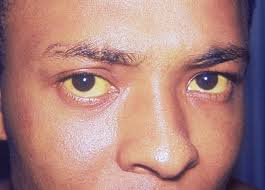
If you notice that your skin or the whites of your eyes are yellow, then you are suffering from jaundice. This is due to a build-up of bilirubin in the blood and tissues. Your liver is an amazing organ and one of its responsibilities is the filtering out of your body’s bi-products or other toxins from your blood, maintaining them at healthy levels. Jaundice is very unsettling to those that have it because it is noticeable by others. Normal coloring will return once the body is able to rid itself of the buildup of these toxins.

Although rare, (approximately 1%) acute hepatitis B can result in life-threatening, fulminant hepatitis, which can lead to liver failure. Fulminant hepatitis requires immediate medical attention.

The other possibility is that you are actually chronically infected, and that your infection is not new, or acute. You may have been living with HBV since birth or early childhood. Your hepatitis B infection may be a complete surprise to you.  You might ask, “How could I have this infection all of these years and not even know it?” Once again, HBV is a silent infection.  For those chronically infected, obvious symptoms may not occur for decades. The liver is a hard-working, non-complaining organ, but you don’t want to ignore your HBV and put yourself at increased risk for cirrhosis, liver failure or liver cancer. Believe it or not, the sooner you learn about your HBV infection, the better, so that you get regular monitoring, seek treatment if necessary, and make lifestyle changes that are good for your liver and overall health.

Whether you have symptoms or not, there are a few things you need to remember. You must go back to your doctor for further lab work to determine if your HBV infection is acute or chronic. If you are still surface antigen positive (HBsAg+) after 6 months, then you have a chronic infection and need to see a liver specialist to learn more about your hepatitis B infection. The other thing you must do is take precautions so you do not transmit hepatitis B to sexual partners and close household contacts.  Fortunately, HBV is a vaccine preventable disease.  Finally, be sure to take care of your liver by eating a well-balanced diet, avoiding alcohol, and talk to your doctor or pharmacist about prescriptions or OTC drugs that may be hard on your liver.

A Capitol Celebration: US Leaders in Hepatitis B Celebrate World Hepatitis Day

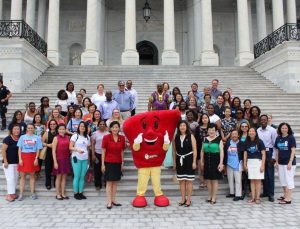
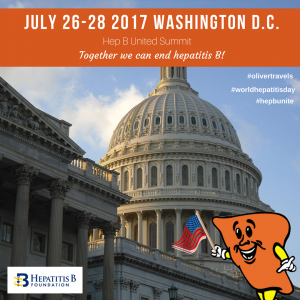
Hep B United (HBU), a coalition established by the Hepatitis B Foundation (HBF) and the Association of Asian Pacific Community Health Organizations (AAPCHO), held its fifth annual Hep B United Summit from July 26th to 28th in Washington D.C. The summit was held to promote screening and prevention strategies and advocate for a cure to further HBU’s mission to eliminate hepatitis B in the United States.

The summit is the largest gathering of hepatitis B leaders from around the country including public health agencies, national non-profit organizations, community coalitions, and individuals and family members affected by hep B. Catherine Freeland, MPH, Public Health Manager of HBF, said, “The summit is like a family reunion.” It’s an opportunity for HBU members to convene, share best strategies, and celebrate their wins over the past five years. The partnerships within HBU ensures that best practices and resources are shared as well. “Once we have a cure, we are committed to making sure chronically infected Americans get it,” Chari Cohen, DrPH, MPH, co-chair of HBU mentioned during the summit. Over the past year, HBU screened 22,556, educated 52,194, and reached over 6 million people with in-language hepatitis B messaging! That’s a win for sure!

As a part of the summit, HBU partners visited Capitol Hill to discuss with federal legislators the need to support hepatitis B and liver cancer research, education, screening, and treatment programs. A Congressional reception was also held to highlight the “#justB: Real People Sharing their Stories of Hepatitis B” storytelling campaign, which increases awareness of hepatitis B through personal stories. There were also meeting sessions focusing on capacity building, sustaining local hepatitis B coalitions, and best ways to utilize resources like the “Know Hepatitis B” campaign from the CDC and Hep B United and the #justB campaign. The Hep B United Summit is a way to celebrate World Hepatitis Day, which is on July 28th every year. Partners celebrated and raised awareness for World Hepatitis Day around Capitol Hill with a scavenger hunt!

At the Summit, HBU and its CDC partners presented five community leaders with the 2017 Hep B Champion Awards in recognition of their outstanding commitment to eliminating hepatitis B and liver cancer in their communities:

 Cathy Phan, the Health Initiatives Project Manager at HOPE Clinic in Houston, Texas, is recognized for her dedication to reducing health disparities, advocating for access to health care and health equity for underserved populations. Cathy brings unique perspectives, best practices and creative, innovative ideas from the local community clinics to the national level.

Vivian Huang, MD, MPH, the Director of Adult Immunization and Emergency Preparedness for the New York City Department of Health and Mental Hygiene and the medical director for the NYC Department of Health Immunization Clinic is recognized for her commitment to reducing the burden of vaccine-preventable diseases locally and globally including hepatitis B and liver cancer. Dr. Huang is a strong, tireless advocate for hepatitis B prevention, education, and treatment and health equity through health department engagement.

Hong Liu, PhD, the Executive Director of the Midwest Asian Health Association in Chicago, Illinois, is recognized for her innovative approaches to educating the public on hepatitis B and her willingness to share her best practices and experiences with others working in the field. This year, Dr. Liu’s leadership has led her organization to educating over 1,337 individuals in Chicago’s Chinatown district and screening close to 300 individuals for hepatitis B.

Dan-Tam Phan-Hoang, MSc., is program manager of HBI-Minnesota, a Minneapolis, Minnesota-based non-profit that she helped start in 2015. Dan-Tam is recognized for her leadership in Minneapolis, building strong collaborations with community leaders, healthcare providers, funders, and government agencies to address hepatitis B throughout the state and successfully establishing a hepatitis B outreach and prevention program for high-risk communities in the Twin Cities.

The National Task Force on Hepatitis B for AAPI, is a national organization that brings together scientists, health professionals, non-profit organizations, and concerned citizens in a concerted effort to eliminate the transmission of hepatitis B and to decrease health disparities among those chronically infected. The Task Force is recognized for increasing physicians’ awareness about hepatitis B and launching a new health care provider program, bringing together public health and health care professionals in regional meetings around the country. The Health Education for Liver Providers (H.E.L.P.) Training Program is designed to provide health care providers and their medical team core medical knowledge of hepatitis B and hepatitis C.

Read the summit press release here.

More pictures of the summit can be found on HBU’s Facebook album, Storify, and e-newsletter.

To read about the Hep B United 2016 Summit from last year, click here.

Join the Conversation at the Hep B United Summit; Watch Summit Sessions On Facebook Live!

Summit Image FB Insta (1)The annual Hep B United Summit, organized by the Hepatitis B Foundation, convenes in Washington D.C. from Thursday, July 27 through Friday, July 28. National and local coalition partners, experts, stakeholders, and federal partners will meet to discuss how to increase hepatitis B testing and vaccination and improve access to care and treatment for individuals living with hepatitis B.

You can watch many of these important sessions on Facebook Live. You can also follow the conversation at the Summit on Twitter with #Hepbunite!

Facebook Live is live video streaming available to all Pages and profiles on Facebook. Check out the agenda below and go to the HepBUnited Facebook Page to view the live broadcast. The session will be made available following the broadcast for those who are not able to join us live.

Here are the details on the sessions that will be broadcast on Facebook Live:

Day 1 – Thursday July 27:

8:30 – 10:00 AM:  Welcome and Introductions
Tim Block, PhD, President & Co-founder, Hepatitis B Foundation and Baruch S. Blumberg Institute, Chari Cohen DrPH, MPH, Co-Chair, Hep B United and Director of Public Health, Hepatitis B Foundation, Jeff Caballero, MPH, Co-Chair, Hep B United and Executive Director, AAPCHO

10:00 – 10:30 AM:  Time to Eliminate Hepatitis B
Dr. John Ward, Director, CDC Division of Viral Hepatitis 

10:30 -11:15 AM:  #justB Storytelling Campaign Panel: Real People Sharing their Stories of Hepatitis B
Rhea Racho, MPP, Public Health Program and Policy Coordinator, Hepatitis B Foundation and storytellers

11:15 – 12:00 PM: Know Hepatitis B Campaign Updates
Cynthia Jorgenson, DrPH, Team Lead and Sherry Chen, MPH, Health Scientist, Division of Viral Hepatitis, Centers for Disease Control and Prevention

12:00 – 12:30 PM:  Increasing Community Awareness and Education
Moderator: Catherine Freeland, MPH, Hepatitis B Foundation and Sherry Chen, CDC

3:00 PM – 4:15 PM:  Breakout Session: Increasing Awareness through Media Engagement
Facilitators: Jessie MacDonald, Vice President, Weber Shandwick and Lisa Thong, Account Supervisor, IW Group

4:15 PM – 5:00 PM:  State of Hep B United
National Advisory Committee
–  Strengthening Coalition Partnerships: Sharing Resources and
–  Overcoming Challenges
Kate Moraras, MPH, Director, Hep B United and Sr. Program Director, Hepatitis B Foundation and Catherine Freeland, MPH, Public Health Program Manager, Hepatitis B Foundation

 Day 2 – Friday July 28

11:30 AM:   Hepatitis B CME Provider Education Program
Amy Trang, PhD, Administrator, National Task Force on Hepatitis B
Focus on Asian Pacific Islander Americans

12:45 PM – 1:45 PM:  HBU Mini-Grantee Presentations
Moderator: Catherine Freeland, MPH, Public Health Program Manager, Hepatitis B Foundation

Not able to join the sessions with Facebook Live? Follow the conversation on Twitter using the #Hepbunite hashtag. Follow the events, Retweet and engage with event attendees and help us raise hepatitis B awareness in the U.S. and around the globe.

World Hepatitis Day is July 28th, and this Summit is a terrific opportunity to share with the world what we’re doing to help those living with hepatitis B in our communities. Other popular hashtags for World Hepatitis Day, and to raise hepatitis B awareness, include: #NOhep, #KnowHepB, #WorldHepatitisDay, #WorldHepDay, #WHD2017, #hepatitis, #hepatitisB, #HBV, #hepB, #justB. Connect with, follow and engage with fellow partners on twitter to keep the hep B conversation going during the Hep B United Summit and World Hepatitis Day events, and beyond.

Check out: @AAPCHOtweets, @AAHC_HOPEclinic, @AAHI_Info, @AAPInews, @apcaaz, @APIAHF, @ASIAOHIO, @CBWCHC, @cdchep, @cpacs, @HBIDC, @HepBFoundation, @HepBpolicy, @HepBProject, @HepBUnited, @HepBUnitedPhila, @HepFreeHawaii, @HHS_ViralHep, @MinorityHealth, @njhepb, @NVHR1, @nycHepB, @NYU_CSAAH, @sfhepbfree, @supportichs @wahainitiative @jlccrum

Missing from the list? Contact the foundation at info@hepb.org to be added.

Don’t forget to join the World Hepatitis Alliance  Thunderclap and register your World Hepatitis Day events  prior to World Hepatitis Day. Be sure to participate in the #ShowYourFace campaign.  and tell the world how you’re standing up against viral hepatitis.

Still have questions? Email us at info@hepb.org and we’ll help you get started!

Visit the Hep B United and Hepatitis B Foundation websites for more information about hepatitis B and related programs.

Join the Conversation at the Hep B United Summit; Watch the Summit On Periscope!

hepbunited-btnThe annual Hep B United Summit, organized by the Hepatitis B Foundation, convenes in Washington D.C. from Wednesday, July 27 through Friday, July 29. National and local coalition partners, experts, stakeholders, and federal partners will meet to discuss how to increase hepatitis B testing and vaccination and improve access to care and treatment for individuals living with hepatitis B.

You can watch many of these important sessions LIVE on Periscope. You can also follow the conversation at the Summit on Twitter with #Hepbunite!

What is Periscope? Periscope broadcasts live video worldwide, in real time, so you can watch it from your computer (via web link) or a mobile device (via Periscope app). The app is free and available for your phone (iPhone and Android) and iPad or Tablet.

Wondering how to use Periscope to watch the Hep B United Summit in real time? There are two options:

  • If you’re using a PC, keep an eye out for a tweet from Hep B United and/or the Hepatitis B Foundation Twitter handles (@hepbunited or @hepbfoundation) that will contain a link to take you directly to the stream.
  • If you’re on the go, you can download the Periscope app for free from the App store or Google Play. You can either login using Twitter or directly with your phone number. Create your Periscope username and then follow hepbunited and hepbfoundation. We’ll be sure to follow you back! Here’s a great Periscope tutorial from Traffic Generation Café to get you started. You can also click on the link from your twitter app.

Here are the details on the sessions that will be broadcast on Periscope:

State of Hepatitis B
1:45-2:15 p.m. Wednesday: Brian McMahon, MD, will provide an update on the state of hepatitis B globally, via a GoToMeeting connection.

Click and watch later here. 

Hep B United and Know Hepatitis B Campaign Accomplishments
2:15-3 p.m. Wednesday:  Cynthia Jorgensen, DrPH, of the CDC’s Division of Viral Hepatitis will provide an update on Hep B United and the Know Hepatitis B campaign accomplishments of the past year.

Click and watch here.

HHS Town Hall on Hepatitis B
9:30 a.m. Thursday:  There will be a town hall conference with U.S. Department of Health and Human Services (HHS), live from HHS.

Click and watch here.

Breakout Session 1:

Developing New Hepatitis B Partnerships and Increasing Awareness
10:45-12:00 p.m. Friday: Contribute and learn about expanding outreach to new sectors (businesses, other at-risk communities, providers, etc.) and hepatitis B education strategies including social and ethnic media engagement. (Facilitators: Thaddeus Pham and Arcadi Kolchak)

Click and watch here.

Leveraging Data and Evaluating Impact
10:45-12:00 p.m. Friday: Discuss and collaborate on hepatitis B data collection and publication strategies, working with IRBs, and leveraging data to evaluate and promote coalition/organization impact. (Facilitators: Moon Chen and Chari Cohen)

Click and watch here.

Breakout Session 2:

Building and Sustaining Local Hepatitis B Coalitions
1:15-2:30 p.m. Friday: Develop strategies to sustain local hepatitis B coalitions and learn about engaging staff and local leadership. (Faciliators: Alex Shirreffs and Mohammad Abdul-Kadir)

Click and watch here.

Navigating Patients and Linkage to Care Strategies
1:15-2:30 p.m. Friday: Contribute to and learn about patient navigation strategies, including overcoming language barriers and working with community health workers and physician champions. (Facilitators: Nirah Johnson and Jane Pan)

Click and watch here.

 Not able to join the sessions with Periscope? Follow the conversation on Twitter using the #Hepbunite hashtag. Follow the events, RT and engage with event attendees and help us raise hepatitis B awareness in the U.S. and around the globe.

World Hepatitis Day is July 28th, and this Summit is a terrific opportunity to share with the world what we’re doing to help those living with hepatitis B in our communities.

Other popular hashtags for World Hepatitis Day, and to raise HBV awareness, include: #NOhep, #KnowHepB, #WorldHepDay, #WHD2016, #hepatitis, #hepatitisB, #HBV, and #hepB

Connect with, follow and engage with some of fellow partners on twitter to keep the HBV conversation going during the HBU Summit and World Hepatitis Day events, and beyond. Check out: @AAPCHOtweets, @AAHC_HOPEclinic, @AAHI_Info, @AAPInews, @apcaaz, @APIAHF, @ASIAOHIO, @CBWCHC, @CCACCInc, @cdchep, @cpacs, @HBIDC, @HepBFoundation, @HepBpolicy, @HepBProject, @HepBUnitedPhila, @HepFreeHawaii, @HHS_ViralHep, @ImmunizeAction, @LaoCenterMN, @MinorityHealth, @njhepb, @nemssf, @NVHR1, @nycHepB, @NYU_CSAAH, @sfhepbfree, @supportichs, @WhiteHouseAAPI,

Missing from the list? Contact the foundation at info@hepb.org to be added.

Don’t forget to join the World Hepatitis Alliance Thunderclap and register your World Hepatitis Day events.

nohep logo

Still have questions? Email us at info@hepb.org and we’ll help you get started!

Visit the Hep B United and Hepatitis B Foundation websites for more information about hepatitis B and related programs.

One in Three People Worldwide Has Had Hepatitis B, So Why Do We Feel So Alone?

Volunteers from the Rann India Foundation teach villagers about hepatitis B testing and prevention in India.

By Christine Kukka

Hepatitis B is the global pandemic no one talks about, yet one in three people worldwide has been infected. In 2013, hepatitis B and C together was the seventh-leading cause of death worldwide, with hepatitis B causing 780,000 deaths annually.

Today, 257 million people have chronic hepatitis B. Despite the availability of an effective vaccine, the number of people living with hepatitis B virus is projected to remain at the current, unacceptably high level for decades and cause 20 million deaths through 2030.

How can this happen? Viral hepatitis infection and death rates far outstrip that of ebola and zika. In fact, you have to combine the death toll from HIV and tuberculosis to find human suffering on par with what viral hepatitis causes around the world each year. Continue reading "One in Three People Worldwide Has Had Hepatitis B, So Why Do We Feel So Alone?"

Twitter Chat: Partner Highlights From Hepatitis Awareness Month

Screen Shot 2015-10-07 at 5.24.25 PM

Join Hep B United, the National Viral Hepatitis Roundtable, CDC’s Division of Viral Hepatitis, and the Hepatitis B Foundation for a Twitter #HepChat Wednesday, June 15 at 2 p.m. EDT. The chat will highlight Hepatitis Awareness Month outreach events and allow hepatitis B and C partner organizations to share their successes, challenges, and lessons learned from their efforts.

Continue reading "Twitter Chat: Partner Highlights From Hepatitis Awareness Month"

Newly Diagnosed with Hepatitis B? Acute or Chronic? Learning the Hep B Basics

Image courtesy of dream designs at FreeDigitalPhotos.net

If you’ve just been diagnosed with hepatitis B after a routine blood test or following a blood donation, you may be feeling overwhelmed with information about this complicated infection and references to acute or chronic hepatitis B.

Here is an explanation of these two terms and what happens when you’re first infected with the hepatitis B virus (HBV). Hepatitis B is transmitted through blood and sexual fluids. It can be spread during unprotected sex, unsafe medical procedures, exposure to blood that enters your body through a cut,  or by sharing personal items such as razors, body jewelry or toothbrushes. Most commonly it is spread during childbirth when the mother is infected.

What is a chronic infection? When we’re infected as newborns or young children, our immature immune systems don’t notice or fight the virus and it travels to our liver and begins reproducing. With no opposition from our immune systems, a hepatitis B infection can continue for years. When a hepatitis B infection lasts longer than six months, it is considered a chronic or long-term infection. Most people with chronic hepatitis B were infected at birth or during early childhood. Immunization with the hepatitis B vaccine and hepatitis B immune globulin (HBIG), if available, within 12 to 24 hours of birth can break this mother-to-child infection cycle, but sometimes the birth dose of the hep B vaccine,  and more often HBIG, is not always available around the world. The birth dose must be followed with the remaining doses of the vaccine, often given as part of a combination vaccine according to schedule. Here are the U.S. and International hep B vaccine schedules. 

What is an acute infection? When we’re infected with HBV as healthy adults, about 90 percent of us are able to get rid of the infection within six months. It can take up to six months for our immune systems to generate antibodies and get rid of the infection in our liver. This short-term infection is called acute hepatitis B.

To determine if you have an acute or chronic infection, you must be tested for hepatitis B over a six-month period. The specific test that indicates if you are infected is the hepatitis B surface antigen (HBsAg) test. This antigen covers the surface of the virus and there are usually lots of HBsAg in your blood when you’re infected. If you test positive for HBsAg for longer than six months, it means you have a chronic hepatitis B infection.

But, if you no longer test positive (or “reactive”) for HBsAg after six months and you develop hepatitis B surface antibodies (HBsAb), then you have cleared hepatitis B after an “acute” infection. There are some additional blood tests that your doctor may order to get a better understanding of your infection, but not everyone has access to these tests. Some tests are rather expensive and they may still need to be repeated over time in order to confirm the diagnosis. Please be patient. The good news is that hepatitis B is not typically an emergency.

Here is more good news. If you are a healthy adult and are newly or acutely infected, know that your chances are good that the hepatitis B infection will go away on its own. It is rare that you require medication to get rid of the virus, your immune system does that for you.  A person with a new hepatitis B infection may not have any symptoms, or they may not be very notable. For example, you might feel more tired. About 70 percent of people newly-infected with hepatitis B never experience symptoms.

But, some people experience severe symptoms like jaundice (yellowing skin or eyes), severe nausea or vomiting, or a bloated stomach (unrelated to your weight), and they need to see a doctor immediately. If you have a new or acute infection, even these drastic symptoms may not necessarily mean that you need any form of treatment, but you will need to be monitored with additional tests to make sure your liver is safe. (Tests like ALT/AST, platelets and bilirubin.)

If you can’t confirm you were infected as a child, you will need to wait the six months to find out if you cleared your infection. Please be patient and do not panic, but remember you need to take precautions during this time to make sure you do not spread the infection to others. Practice safe sex (use a condom), and don’t share personal hygiene items that may have trace amounts of blood on them.

We also  suggest that family members, close household contacts and sexual partners get tested for hepatitis B and vaccinated if needed. Have them get the triple hepatitis B panel: HBsAg, HBcAb total and HBsAb. This will tell them if they have a current infection, if they recovered from a past infection, or if they are vulnerable and need to be vaccinated. This helpful chart will help with understanding blood tests.  There can be up to a nine-week period right after infection when they may not test positive for HBsAg even if they have been infected.  Repeat testing if unsure.

Celebrate Asian-Pacific American Heritage Month, And Get Tested for Hepatitis B

Image courtesy of hin255 at FreeDigitalPhotos.net

May is Asian-Pacific American Heritage Month – a celebration of Asians and Pacific Islanders in the United States. The month of May was selected in 1978 to mark the first major Japanese immigration to the United States (May 7, 1843), and the completion of the transcontinental railroad (May 10, 1869), built primarily by Chinese immigrants.

Like all immigrants, Asians and Pacific Islanders brought with them unique cultures, languages, and lingering health problems from their homeland, including hepatitis B.

This blood-borne infection, unknowingly passed from mother-to-child, is an infection without a cure that would impact Asian immigrants and their children for decades until a vaccine was developed.

Today, administration of the first dose of the hepatitis B vaccine along with a dose of HBIG within 12 hours of birth severs this viral legacy and protects newborns from inheriting this infection. But that is not the end of the story. There are still many Asian-Americans who remain infected, and many Asian immigrants arriving today live with hepatitis B.

An estimated one in 12 Asian-Americans currently has hepatitis B, and two in three don’t know they are infected. Their infection rate is more than 20 times higher than that of the total U.S. population. Hepatitis B is the greatest health disparity between Asian-Americans and the general U.S. population. Approximately 1 million Asian-Americans are living with chronic hepatitis B infection – that’s about half of all cases in the United States. Continue reading "Celebrate Asian-Pacific American Heritage Month, And Get Tested for Hepatitis B"

Make a Vine Video with #HepBUnite for the 2016 Hepatitis B Awareness Campaign!

hepb-united-btn


How do you unite for hepatitis B?      VINE TO WIN!


Join Hep B United for a national hepatitis B awareness campaign. Create an action-oriented awareness message about hepatitis B through a six-second Vine ​video! Hep B United will use selected video entries in its social media efforts in May 2016 to help promote Hepatitis Awareness Month. Your video could be included in its national awareness campaign!

Eligibility: ​Anyone and everyone may participate! You do not have to be a member of Hep B United or any organization.

What to Do: ​Use Vine to create a six-second ​video (click for example) focusing on the 2016 theme “#HepBUnite: How you unite for hepatitis B.” You can create your video alone, or with a group. Your message should focus on how you are united around hepatitis B. You could highlight hepatitis B prevention activities that you participate in, or feature a key fact about hepatitis B in your video. Although not required, Hep B United encourages you to use the materials available from the Know Hepatitis B campaign!

How to Enter:

  1. Between April 11 and April 29, post your video to either Vine, Facebook or Twitter. Be sure to include the hashtag “​ #hepbunite”​ and tag @HepBUnited.
  2. Submit your video link with your name and contact information by e-mail to connect@hepbunited.org​.

Contest Entry Requirements

  1. Each video must be original.
  2. Each video must include the hashtag ​“#hepbunite” and tag @HepBUnited on Twitterand/or Facebook in order to track the videos.
  3. Videos should not include any material that would require the consent of any third party or violate any copyright, privacy right, or any other right of a third party. If used, Know Hepatitis B campaign materials should be used in their entirety and retain the CDC and HBU logos.
  4. Submissions including offensive language, imagery or themes will be excluded from the competition.

Be Creative and Have Fun!

  • Be creative to get across your hepatitis B awareness message!
  • Need inspiration? Looking for video ideas? Consider “linking arms,” “flexing your muscles to combat hep B,” “running in a group,” “group high five,” or “shout out with office staff/community groups!”
  • Check out the ​Hep B United or ​Know Hepatitis B Campaign website for background statistics and resources you can use!

Selection of Winners and Prizes

  • Selected videos will be included in the 2016 May Hepatitis Awareness Month Hep B United social media campaign.
  • Selected videos will be included in the creation of additional materials promoting hepatitis B awareness around the U.S.
  • Three finalists will be chosen by a panel of judges as best exemplifying the 2016 #HepBUnite theme.
  • A Grand Prize winner will be chosen from the three finalists and will win $100. The two remaining finalists will each win $50.
  • The finalists will be notified by email, and the grand prize winning video will be revealed to the public in mid-May through social media and press releases.

Selected entries will be included in the Hep B United social media campaign! Two finalists will win $50 each!
One Grand Prize winner will win $100!

Submission Period: Post and submit your Vines between
April 11 and April 29, 2016, (contest closes at 11:59 p.m. Eastern Time on April 29)

Questions? Please contact Pavitri Dwivedi at ​Pavitri.Dwivedi@hepb.org