
Hep B Blog

Category Archives: Hepatitis B Diagnosis & Monitoring

Hepatitis B Foundation Launches Education Initiative for People Coinfected with Hepatitis B and D

hepc-graphicBy Sierra Pellechio

The Hepatitis B Foundation is excited to launch the Hepatitis Delta Connect program to provide education and resources for patients and families affected by hepatitis D, the most aggressive form of viral hepatitis. Hepatitis D infection requires the presence of the hepatitis B surface antigen (HBsAg), so only people already infected with hepatitis B can become infected with hepatitis D.

There is a large gap in knowledge and awareness about this virus, and the foundation is working to provide easily-accessible information and support to those in need.

Because the hepatitis D virus (HDV) is acquired only if a hepatitis B infection is present, it can be effectively prevented through hepatitis B vaccination. While hepatitis D is not common in the United States, worldwide it affects 15-20 million people.

Areas with the highest rates of hepatitis D infection rate include China, Russia, the Middle East, Mongolia, Romania, Georgia, Turkey, Pakistan, Africa and the Amazonian river basin. It is transmitted through direct contact with infected blood and bodily fluids, and most commonly affects high-risk groups such as intravenous drug users, men who have sex with men or have multiple sexual partners, and people emigrating from countries where hepatitis D is common.

Hepatitis D can be acquired either through coinfection (becoming infected with hepatitis D and B at the same time) or a super-infection (becoming infected with hepatitis D after a person has hepatitis B). A coinfection generally resolves spontaneously after about six months, but it can sometimes result in life-threatening or fatal liver failure. Like hepatitis B, hepatitis D may not present with any symptoms, so getting a simple blood test is the only way to know if you are infected.

Treatment options are limited, but pegylated interferon has shown some effectiveness in a small percentage of patients (less than 30 percent). The good news is that there are five promising drugs currently in clinical trials. Visit our HDV Drug Watch and Clinical Trials page for more information about these drugs. We at the Hepatitis B Foundation appreciate the support of Eiger Biopharmaceuticals to help launch this valuable patient-focused program.

Hepatitis D is a complicated virus, and for this reason, it is very important for patients to find a knowledgeable liver specialist (or hepatologist) who can provide the best care and management.

The most important message for those living with hepatitis B is to get a simple blood test to find out if they have hepatitis D if they believe they are at risk. There are promising new treatments that could help prevent the serious complications related to a hepatitis B and D coinfection.

As the coordinator of Hepatitis Delta Connect, I am thrilled about this opportunity to help create a resource for patients who are living with hepatitis D. My experience in health literacy and community outreach blend with my commitment to support those in need, allowing me to promote the project in ways that will help raise the visibility of hepatitis D and let the 15-20 million infected people know that they are not alone.

In addition to our website, please email questions to connect@hepdconnect.org follow us on Facebook, Twitter and Instagram (@hepdconnect) to join the global conversation. We look forward to hearing from you.

Why Raised Voices, Phone Calls and Letter Writing Are Critical to Eradicate Hepatitis B

2013-05-17_HepbUnitedEventBy Christine Kukka

Getting the medical care we need requires advocacy, because in the U.S. the quality of our healthcare–and even how long we live–depends on our income, ethnicity, gender and where we live. That is especially true when we live with hepatitis B.

Many affected by hepatitis B are not endowed with money, privilege or political power. Most of us are immigrants and people of African and Asian descent. This infection illuminates our country’s racial divides in healthcare. Asian-Americans, for example, have liver cancer rates 13-times higher than white Americans because they were never tested for hepatitis B, diagnosed or treated until it was too late.

Many of us are gay or injecting drug users. We are often uninsured or under-insured, which leaves us unable to pay for testing or treatment.

Our doctors, who often work in healthcare systems focused more on the bottom line than patient care, see too many patients in too little time. They may not know to screen us for hepatitis B, or monitor us properly and refer us for treatment when the infection damages our livers.

Despite good intentions, we live with a broken healthcare system and like any political system it requires the actions of patients, voters and advocacy organizations to improve.

Participants Perform a B A Hero Chant

The Hepatitis B Foundation and national coalitions including Hep B United are working within the political system to make healthcare more equitable and accountable.  They’re fighting to get more funding so the U.S. Centers for Disease Control and Prevention and the National Institute of Health have more resources to eradicate hepatitis B. Recently, these advocates scored a victory. Continue reading "Why Raised Voices, Phone Calls and Letter Writing Are Critical to Eradicate Hepatitis B"

You’ve Lost the Hepatitis B Surface Antigen, Go Celebrate, But Keep Monitoring

By Christine Kukka

Image courtesy of stockimages at FreeDigitalPhotos.net

After years of living with “inactive’ chronic hepatitis B—with low viral load and no signs of liver damage–some patients may finally lose the hepatitis B surface antigen (HBsAg) and even develop surface antibodies.

This event merits a celebration and a huge sigh of relief, but if you think you will never have to get another blood draw or worry about your liver, think again. We hate to be the bearer of bad news, but hepatitis B really never goes away.

Image courtesy of stockimages at FreeDigitalPhotos.net

Think herpes, mono, or chicken pox and shingles. Children infected with chickenpox get rid of the infection and the ugly blisters, but very small amounts of the chickenpox (varicella) virus remains in the spinal nerves. As we grow older and our immune systems weaken with age,  our bodies aren’t able to suppress the varicella virus any more and it reactivates, causing painful shingles.

The hepatitis B virus (HBV) behaves in the same way. When we lose HBsAg and even develop surface antibodies (anti-HBs), there are still HBV lurking in our livers. When we’re healthy, our immune systems suppress the virus and prevent any reactivation, but old age or another disease or medical condition can weaken our bodies and allow the viral infection to reactivate.

So, even after we clear HBsAg, we need to stay vigilant and continue to get our liver health monitored regularly. Here is what you need to know:

First, what are my chances of ever getting rid of HBsAg and developing the surface antibody? It can happen, especially in older adults after a long period of “inactive” hepatitis B infection.

About 1 to 3 percent of people with chronic hepatitis B lose HBsAg each year, and about half of all people with chronic infections who live up to age 75 will lose HBsAg, depending on the amount of HBV DNA in their blood.

Your chances of losing HBsAg and developing the surface antibody increase if you have a healthy lifestyle and avoid alcohol, cigarettes and obesity (fatty liver). Another report found that people with the hepatitis B strain or genotype C have higher rates of clearing HBsAg over time than those with genotype B.

Image courtesy of taoty at FreeDigitalPhotos.net

Once you clear HBsAg, the chance of developing surface antibodies over the next two, five and 10 years are 24 percent, 58 percent and 78 percent respectively, according to a recent report in the September 2016 journal of Epidemiology and Infection.

After I clear HBsAg, how often do I need to get my liver health monitored? According to Dr. Robert Gish, medical director of the Hepatitis B Foundation and professor consultant of gastroenterology and hepatology at Stanford University, once you have cleared HBsAg, 12 months later you need to:

  • Check all of your liver enzymes and liver function
  • Get your platelet count and hepatitis B blood tests done, and
  • Have an ultrasound of your liver and spleen.

These tests become your new “baseline” that your doctor can refer too in the years ahead while monitoring your liver health.

Your baseline ultrasound should examine your liver and measure its portal vein (it should be under 12 mm) and spleen (it should be under 12 cm) to make sure it’s normal with no signs of cirrhosis or portal hypertension.

If you had cirrhosis before you cleared HBsAg: You need to be surveyed for liver cancer (with an ultrasound, alpha fetoprotein (AFP) blood test and a Des-gamma-carboxy prothrombin (DCP) test) every six months for at least five years, because cirrhosis puts you at high risk of liver cancer. Once an ultrasound finds no evidence of cirrhosis and all other tests are normal, including the cancer tests, then the testing can become less frequent and your doctor can prescribe a new monitoring schedule.

If you’ve had elevated liver enzymes (called ALT or SGPT) in the past, (higher than 19 in women and 30 in men), you need to continue to get tested every six months until you’ve had two consecutive healthy ALT readings. If your ALT remains elevated, make sure you are not drinking alcohol and do not have fatty liver disease. Talk to your doctor about a new monitoring schedule.

Tell all of your current and future doctors you’ve had hepatitis B, and beware of immune-suppressing drugs used to treat various cancers and rheumatoid arthritis. Our immune systems, which are working to keep the residual HBV in our bodies in check, can also take a hit from medications that deliberately suppress our immune systems in order to fight cancer, psoriasis or rheumatoid arthritis.

According to medical guidelines, all oncologists and other specialists who use these powerful drugs are supposed to test all  their patients for hepatitis B and carefully monitor anyone who had hepatitis B in the past, which is indicated by a positive test for the hepatitis B core antibody (anti-HBc).

Even if you’ve cleared HBsAg, doctors may pre-emptively treat you with antivirals during and after your treatment for cancer, immune disorders such as arthritis or psoriasis, and hepatitis C and monitor your HBsAg and viral load regularly to make sure your hepatitis B does not reactivate.

These screening guidelines exist, but no one is perfect and your oncologist may not know you’ve been infected, may forget to screen you for hepatitis B, or may not understand the testing. So, tell everyone if you have an active or resolved hepatitis B infection. The last thing you want is to be battling both cancer and a reactivated hepatitis B infection simultaneously.

While hepatitis B never really goes away, once you clear HBsAg your risk of liver damage and liver cancer diminish tremendously. It’s worth a celebration, but you need to continue to be monitored as you age.

Advocates Raise Awareness About African Immigrants’ High Risk of Hepatitis B

Volunteers at Boston's National African Immigrant and Refugee HIV/AIDS and Hepatitis Awareness Day
Volunteers at Boston’s National African Immigrant and Refugee HIV/AIDS and Hepatitis Awareness Day

By Christine Kukka

For years, public health advocates have struggled to educate both doctors and Asian-Americans about the high risk of hepatitis B that this ethnic group faces. It’s been a slow, uphill battle marked by moderate success.

Despite the fact that one in 12 Asian-Americans and Pacific Islanders (AAPI) is chronically infected with hepatitis B, more than two-thirds of them haven’t been screened and don’t know they’re infected.

But another group of immigrants and their children—from Sub-Saharan Africa—are also at high risk of hepatitis B and have received even less attention from public health advocates and the medical community across the U.S.

Of foreign-born U.S. residents with hepatitis B, about 58 percent are AAPIs and 11 percent come from Africa. In the past 20 years, the number of immigrants–primarily from war-torn Somalia, Nigeria, Ethiopia, Ghana, Kenya, and Egypt–have increased more than 750 percent. There are now 1.6 million African immigrants in the U.S. and 10 percent are believed to be infected with chronic hepatitis B.

In the largest study of its kind, 955 African-born residents living in New York City were screened for hepatitis B between 2011 and 2013. Doctors found 74 percent had been infected with hepatitis B in the past, and 9.6 percent had current, chronic or long-term infections.

Ponni V. Perumalswami, MD, director of the Hepatitis Outreach Network (HONE) at Mount Sinai School of Medicine in New York City

“I believe African immigrants have been underserved by our healthcare system,” observed Ponni V. Perumalswami, MD, assistant professor of medicine and director of the Hepatitis Outreach Network (HONE) at Mount Sinai School of Medicine in New York City and lead researcher of the New York City study. “Similar to Asian-Americans, African immigrants are often not screened or referred to treatment. Additionally, many at-risk African immigrants are not currently engaged in health care and have struggled to access medical care in our communities.”

Healthcare providers have struggled for decades to provide the resources and culturally-competent care needed to screen, immunize and refer infected AAPIs for treatment; now they must develop new strategies to reach African immigrant communities. These communities, found in large cities such as Atlanta and New York and in small towns such as Lewiston, Maine, have a wide array of distinct cultures, healthcare practices and languages.

A young Somali refugee. Courtesy of USAID (USAID) [Public domain], via Wikimedia Commons.
Like their AAPI counterparts, many African immigrants lack access to any healthcare, let alone culturally-competent medical care that is trusted and embraced. “There is clearly a healthcare disparity with respect to the large burden of hepatitis B disease in this community, however very little research has been done to identify these gaps and develop successful interventions to bridge them,” Perumalswami explained.

She is now testing a group education program—called the Hepatitis Outreach NEtwork (HONE)–that could be adapted nationwide to raise awareness about hepatitis B. HONE enlists local public health agencies, community organizations, health care providers and community leaders to reach African immigrant communities. She also recommends using patient navigators from each immigrant African ethnic group to help people get screened, immunized and into treatment. “Not every person needs a patient navigator, but they can be very effective in getting some people screened and those infected linked to care,” she said

But for many, this outreach is too little too late. “Unfortunately, it is not uncommon for me to see patients who have been silently infected for decades with advanced liver cancer or suffering from complications of liver failure when we diagnose their hepatitis B infection for the first time,” she said.

That lack of screening and treatment continues to haunt AAPI communities. Vietnamese-American men whose infections were not diagnosed until it was too late make up a large percentage of people with liver cancer in the U.S.

Courtesy of the U.S. Centers for Disease Control and Prevention.

“It’s particularly troubling as we have a highly effective vaccine to

prevent hepatitis B and highly effective treatments to decrease the risk of liver cancer and liver disease progression,” Perumalswami commented.

In an effort to raise awareness about hepatitis B and C and HIV in the African immigrant community, a coalition of organizations, including the Hepatitis B Foundation and Hep B United, and local and national groups are supporting National African Immigrant and Refugee HIV/AIDS and Hepatitis Awareness Day (NAIRHAA Day) on Sept. 9.

A Twitter chat exploring ways to raise awareness among African immigrants in the U.S. is scheduled for 2 p.m. (EST) Tuesday, Sept. 13. Use hashtag  #AIHHchat

For more information about NAIRHAA, including webinar training for healthcare providers and public health officials, please explore the following:

Facebook: https://www.facebook.com/NAIRHHA

Twitter: @NAIRHHADay

Thunderclap: http://thndr.it/1IQC4TB

Webinar training on Improving Hepatitis B Screening and Care Among African Immigrants (June 2016): https://www.youtube.com/watch?v=ixyelHdVPh4

Webinar 1 (Epidemiology)  https://www.youtube.com/watch?v=RWYGgyNSIK8

Webinar 2 (HIV)  https://www.youtube.com/watch?v=T0LOybRvjNw

Webinar 3 (Hepatitis B) https://www.youtube.com/watch?v=g47Dm3rV4-Y

For more information, contact Siede Slopadoe, lead organizer for NAIRHAA Day, at sslopadoe@mac-boston.org

Newly Diagnosed with Hepatitis B? Acute or Chronic? Learning the Hep B Basics

Image courtesy of dream designs at FreeDigitalPhotos.net

If you’ve just been diagnosed with hepatitis B after a routine blood test or following a blood donation, you may be feeling overwhelmed with information about this complicated infection and references to acute or chronic hepatitis B.

Here is an explanation of these two terms and what happens when you’re first infected with the hepatitis B virus (HBV). Hepatitis B is transmitted through blood and sexual fluids. It can be spread during unprotected sex, unsafe medical procedures, exposure to blood that enters your body through a cut,  or by sharing personal items such as razors, body jewelry or toothbrushes. Most commonly it is spread during childbirth when the mother is infected.

What is a chronic infection? When we’re infected as newborns or young children, our immature immune systems don’t notice or fight the virus and it travels to our liver and begins reproducing. With no opposition from our immune systems, a hepatitis B infection can continue for years. When a hepatitis B infection lasts longer than six months, it is considered a chronic or long-term infection. Most people with chronic hepatitis B were infected at birth or during early childhood. Immunization with the hepatitis B vaccine and hepatitis B immune globulin (HBIG), if available, within 12 to 24 hours of birth can break this mother-to-child infection cycle, but sometimes the birth dose of the hep B vaccine,  and more often HBIG, is not always available around the world. The birth dose must be followed with the remaining doses of the vaccine, often given as part of a combination vaccine according to schedule. Here are the U.S. and International hep B vaccine schedules. 

What is an acute infection? When we’re infected with HBV as healthy adults, about 90 percent of us are able to get rid of the infection within six months. It can take up to six months for our immune systems to generate antibodies and get rid of the infection in our liver. This short-term infection is called acute hepatitis B.

To determine if you have an acute or chronic infection, you must be tested for hepatitis B over a six-month period. The specific test that indicates if you are infected is the hepatitis B surface antigen (HBsAg) test. This antigen covers the surface of the virus and there are usually lots of HBsAg in your blood when you’re infected. If you test positive for HBsAg for longer than six months, it means you have a chronic hepatitis B infection.

But, if you no longer test positive (or “reactive”) for HBsAg after six months and you develop hepatitis B surface antibodies (HBsAb), then you have cleared hepatitis B after an “acute” infection. There are some additional blood tests that your doctor may order to get a better understanding of your infection, but not everyone has access to these tests. Some tests are rather expensive and they may still need to be repeated over time in order to confirm the diagnosis. Please be patient. The good news is that hepatitis B is not typically an emergency.

Here is more good news. If you are a healthy adult and are newly or acutely infected, know that your chances are good that the hepatitis B infection will go away on its own. It is rare that you require medication to get rid of the virus, your immune system does that for you.  A person with a new hepatitis B infection may not have any symptoms, or they may not be very notable. For example, you might feel more tired. About 70 percent of people newly-infected with hepatitis B never experience symptoms.

But, some people experience severe symptoms like jaundice (yellowing skin or eyes), severe nausea or vomiting, or a bloated stomach (unrelated to your weight), and they need to see a doctor immediately. If you have a new or acute infection, even these drastic symptoms may not necessarily mean that you need any form of treatment, but you will need to be monitored with additional tests to make sure your liver is safe. (Tests like ALT/AST, platelets and bilirubin.)

If you can’t confirm you were infected as a child, you will need to wait the six months to find out if you cleared your infection. Please be patient and do not panic, but remember you need to take precautions during this time to make sure you do not spread the infection to others. Practice safe sex (use a condom), and don’t share personal hygiene items that may have trace amounts of blood on them.

We also  suggest that family members, close household contacts and sexual partners get tested for hepatitis B and vaccinated if needed. Have them get the triple hepatitis B panel: HBsAg, HBcAb total and HBsAb. This will tell them if they have a current infection, if they recovered from a past infection, or if they are vulnerable and need to be vaccinated. This helpful chart will help with understanding blood tests.  There can be up to a nine-week period right after infection when they may not test positive for HBsAg even if they have been infected.  Repeat testing if unsure.

Celebrate Mothers’ Day with High-Quality Healthcare First, Sentimentality Second

Image courtesy of David Castillo Dominici at FreeDigitalPhotos.net.

By Christine Kukka

In 1914, the United States designated the second Sunday in May as “Mothers’ Day.” Its founder, Anna Jarvis, hoped the holiday would focus on her own mother’s work promoting peace and public health. Years later, Jarvis protested loudly when the holiday became better known for sentimentality and greeting card sales.

Our nation often loses sight of a holiday’s original intent, but this Mother’s Day we can bring back the goal of preserving public health, especially where it concerns mothers and infectious diseases.

Decades ago, researchers developed one of the most extraordinary life-saving vaccines–hepatitis B immunization. It saves lives in two ways: It protects children and adults from infection and it breaks the vicious cycle of mother-to-child infection. A baby born to a hepatitis B-infected almost always becomes infected. The vaccine, administered within hours of birth, breaks that cycle.

When the vaccine debuted in the late 1970s and early 1980s, most people with chronic hepatitis B had been infected at birth. When newborns and children are infected, their immune systems don’t recognize or attack the virus and the infection can continue indefinitely.

To stop this infection cycle, today all pregnant women are screened for hepatitis B. Babies born to infected women are immediately vaccinated and treated with HBIG (hepatitis B antibodies). This public health initiative has been extremely successful in dramatically reducing hepatitis B. However, the campaign’s focus has been primarily on newborns and the hepatitis B-infected mothers were often forgotten. Though hepatitis B infections had been identified, the infected mothers were often lost to follow-up, and this neglect continues today. Continue reading "Celebrate Mothers’ Day with High-Quality Healthcare First, Sentimentality Second"

It’s Hepatitis Awareness Month: Five Reasons We Don’t Get Tested, and How to Overcome Them

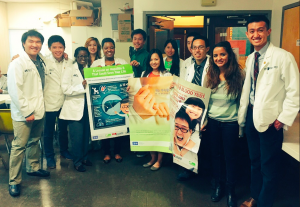
Members of Drexel University's Asian Pacific American Medical Student Association participate in a hepatitis B screening program at a Chinese Christian church in Philadelphia.
Members of Drexel University’s Asian Pacific American Medical Student Association participate in a hepatitis B screening program at a Chinese Christian church in Philadelphia.

May is Hepatitis Awareness month. Why do we need an annual reminder about hepatitis B? Because 65 percent of the estimated 2.2 million people in the U.S. living with hepatitis B don’t know they’re infected.

Studies show when people know their hepatitis B status, they’re more likely to get monitored regularly, get treatment, and take steps to avoid passing on the disease to partners and their children.

So why are so many Americans unaware of their hepatitis B infection? Here are five roadblocks that stop us from getting tested for hepatitis B, and what how we can do to overcome them.

We feel fine, so we assume we’re not infected. Hepatitis B rarely causes symptoms. There are very few sensory nerves around the liver, so when a viral hepatitis infection strikes, we rarely feel its effects. As a result, most of us – especially if we were infected as children or newborns – never experience any symptoms for decades. So remember, “feeling OK” is no excuse to avoid testing. Continue reading "It’s Hepatitis Awareness Month: Five Reasons We Don’t Get Tested, and How to Overcome Them"

How Was I Infected with Hepatitis B? Making the Journey from Anger to Acceptance

Image courtesy of stockimages at FreeDigitalPhotos.net

By Christine Kukka

“How did I get infected? Who could have infected me?” These questions are common when we are first diagnosed with hepatitis B.

Dumbfounded by the news, we struggle to understand when this infection could have occurred and who could have infected us with a virus that now threatens our health and well-being.

This diagnosis not only affects our health, it can weaken the trust we’ve placed in family members, friends and lovers. It threatens to dismantle basic beliefs we’ve held about fairness and honesty, and the assumption that if we treated people well that we would be treated fairly in return. Infections know no moral codes and ignore all the unspoken deals we have made with the universe. Continue reading "How Was I Infected with Hepatitis B? Making the Journey from Anger to Acceptance"

Know Your Rights: If You Suffer Severe Liver Damage from Hepatitis B, You May Qualify for SSDI or SSI

 Image courtesy of Stuart Miles at FreeDigitalPhotos.net
Image courtesy of Stuart Miles at FreeDigitalPhotos.net

The majority of people infected with hepatitis B lead healthy and normal lives. However, a small number of people may develop liver disease that will dramatically affect their quality of life and their ability to work on a short-term or long-term basis.

They may not be able to work for several weeks because of side effects from pegylated interferon treatment, or progressive liver damage could make it impossible to work and support themselves and their families even after treatment.

Below is information that can help you, your family members, or someone you advocate for apply for disability benefits to help them during when they can’t work due to hepatitis B-related health problems. The first step is to find out if you can meet the Social Security Administration’s (SSA’s) medical eligibility requirements to receive disability support. Continue reading "Know Your Rights: If You Suffer Severe Liver Damage from Hepatitis B, You May Qualify for SSDI or SSI"