

Hep B Blog

Category Archives: Hepatitis B Prevention

The Hepatitis B Community Cringes As Vaccine Skeptics Take the Stage in Washington

Image courtesy of Tuomas_Lehtinen at FreeDigitalPhotos.net

By Christine Kukka

In a profound blow to science, public health and the hepatitis B community, President-elect Donald Trump is reportedly asking Robert F. Kennedy Jr. — who believes that vaccines cause autism — to chair a national commission on vaccines.

Countless studies show vaccines are safe and effective and do not cause autism. The hepatitis B vaccine alone has contributed to an 82 percent drop in this deadly liver disease in the U.S. since 1991. Before universal childhood immunizations became available, one in 20 Americans had been infected with hepatitis B. Sadly, that spectacular success has not quieted vaccine skeptics.

It is heart-breaking to hear that an anti-vaccine activist may gain a public forum to promote his scientifically-unfounded opinions. If the hepatitis B vaccine had been available to my daughter and millions of others around the world at birth, there would be fewer people with chronic hepatitis B, fewer deaths from liver disease and cancer and far less anguish, fear and stigma. Vaccines safely and effectively prevent disease, and all of us who have been touched by hepatitis B can attest to their life-saving value.

Let’s review the indisputable scientific facts about vaccines, and why this controversy has resurfaced.

In 1998, the well-respected medical journal Lancet published a paper by researcher Andrew Wakefield and 12 of his colleagues linking a standard measles, mumps and rubella (MMR) vaccine and its preservative  thimerosal to autism. Despite its tiny sample size (just 12 children) and its speculative conclusions, the study was publicized and bolstered the anti-vaccine movement.

The study proved to be a fraud. Editors of the Lancet later retracted the report, and additional investigations into the study found some of children in the study did even have autism. But the damage was done and hepatitis B vaccine makers and others scrambled to remove thimerasol from their vaccines to counter the undocumented claims that it posed a threat to children. A thimerasol-free, hepatitis B vaccine became available in  late 1999.

Image courtesy of meepoohfoto at FreeDigitalPhotos.net.

But parents in the U.S. increasingly chose not to vaccinate their children, even after the disappearance of thimerasol. They didn’t like all the shots their babies were given, and vaccines became victims of their own success. They were so effective that parents began to believe their children were no longer at risk of these vaccine-preventable diseases and did not need immunization.

Before the measles vaccine became available, there were 500,000 cases of measles annually in the U.S. and 500 deaths. By 2000, due to universal immunization, measles had been eradicated. Then the anti-vaccine movement took hold and more and more parents chose not to vaccinate their children. In 2014, the U.S. experienced 667 cases of measles in 27 states, including an outbreak at Disneyland. This is what happens when parents stop vaccinating their children.

What is so piercing and terrible is that millions of us would be free of hepatitis B if only we had been vaccinated at birth or during childhood.

To arouse suspicion about vaccines that save millions of people every day is unforgivable. My daughter has hepatitis B today because this vaccine was not available when she was born. To plant false seeds of doubt about a life-saving vaccine undermines all we have worked for in our effort to eradicate hepatitis B in the next 30 years.

“A conspiracy theory such as the one about the autism vaccine is like an untreated wound,” wrote Michael Specter recently in The New Yorker. “It has festered for years, and yesterday Trump and Kennedy guaranteed that it can only deepen—causing tremendous destruction and needless pain.”

For factual information about vaccine safety, schedules, and why babies are given so many vaccines, click here.


Kate Moraras: Making Sure Federal Policies Work to Eliminate Hepatitis B Locally

Kate Moraras, Hepatitis B Foundation senior program director and Hep B United director.

By Christine Kukka

It’s Kate Moraras’ job to make sure federal programs crafted in the elite halls and federal agencies of Capitol Hill are what’s really needed to eliminate hepatitis B in Asian-American, African and other at-risk communities across the country.

Simply put, her goal is to eradicate, “the most staggering health disparity facing immigrant communities.”

The people on whose behalf Moraras works are among the most vulnerable and powerless in the country. They include Asian-American and Pacific Islander (AAPI) and African immigrants who were infected at birth or by contaminated syringes or medical tools in their countries of origin.

As senior program director at the Hepatitis B Foundation and director of the Hep B United national coalition for the past three years, Moraras has worked with federal officials and dozens of hepatitis community advocates across the country to align federal policy with the need of diverse, hard-to-reach communities.

“I have always been drawn to systems-level change and I saw public health policy as a key area where there are opportunities to make an impact,” she explained. She was energized by the prospect of finding solutions that would improve healthcare at the individual and community level, and she obtained her master in public health at George Washington University.

After graduation, Moraras learned about hepatitis B when she was working on AAPI health disparities in the federal government. “Then, my uncle found out he had chronic hepatitis B when he tried to donate blood,” she recalled. Suddenly, what had been a matter of political injustice became a personal cause and she began working at the foundation.

Moraras knows federal policies don’t succeed unless they make a difference on the streets of America. “Grassroots and culturally-focused organizations are pivotal to eradicating hepatitis B because they know their communities and how they are at risk of hepatitis B,” she explained.

Preventing and treating hepatitis B in immigrant communities requires cultural nuance. Each community has its own language, cultural practices and healthcare beliefs. Many lack insurance coverage and when they finally reach a clinic or doctor’s office, the cultural disconnect creates an insurmountable barrier to learning about this complex disease.

This is why having local organizations whose staff know the culture, speak the language and can bridge the glaring healthcare gap that now stops people from getting vaccinated and treated for hepatitis B is key. “Their communities trust them, which is so critical when it comes to navigating healthcare and communicating accurate information about hepatitis B, a disease that is stigmatized in many AAPI communities. If we want to eradicate hepatitis B in the U.S., we must partner with local organizations and make sure they have adequate resources to do the job.”

Hep B United and the foundation are working to make sure federal policy helps, rather than hinders, these vital, local initiatives.

“Fortunately, we have had champions within the federal government who have taken the opportunity to lead national efforts to address hepatitis B — for example, former Assistant Secretary for Health Dr. Howard Koh who led the development of the National Viral Hepatitis Action Plan and a White House Initiative tasked with specifically focusing on AAPI communities, with a cross-cutting voice and broad reach,” she said.

“CDC now has a multilingual communications campaign, the Know Hepatitis B campaign, to encourage hepatitis B testing among AAPI communities with educational materials in a variety of Asian languages,” she added. At state and local levels, there have been city councilors and state legislators who have become champions who advocate for funding for effective community programs to increase public awareness.

“What remains challenging is the disconnect between local groups providing direct services to people and federal agencies that are working to make and implement policy at the 30,000-foot level,” she said. “For example, we still do not have a national surveillance system to monitor chronic hepatitis B cases and trends and there remains an overall lack of awareness and attention to hepatitis B at the national level. We must all continue to ask for real investment by the federal government to combat hepatitis B.

“We need to build a national hepatitis B grassroots movement, which is something that I would like to see happen through my job and Hep B United in the years ahead,” she added. “We have built a strong coalition that continues to expand every year, we have powerful advocates from local communities who have taken on leadership roles in national hepatitis advocacy and I would like to see our movement continue to grow and translate to the millions of individuals we have the potential to reach.”

Hep B United is a national coalition to address and eliminate hepatitis B, a serious liver infection that is the leading cause of liver cancer.  An estimated 2 million people in the United States are chronically infected with the hepatitis B virus.  Hep B United aims to meet this public health challenge by increasing hepatitis B awareness, testing, vaccination and treatment.

Family Getting Together for The Holidays? Time to Talk Hepatitis B and Your Family’s Health History

Image courtesy of Apolonia at FreeDigitalPhotos.net.

By Christine Kukka

When we have chronic hepatitis B, knowing our family medical history can give us an inside edge to fight this infection.

Hepatitis B is an infection that often runs in families. Knowing how our parents, grandparents and aunts/uncles responded to this liver disease can give us insider information about our own genetic prospects with hepatitis B.

Experts estimate that more than half of us worldwide became infected at birth. Our mothers may have been infected with hepatitis B. Immunization, which can prevent infection if administered within 12 hours of birth, was not available to us as newborns, nor to our mothers or grandmothers.

So if we suspect or know our parents have or had hepatitis B, it’s important to find out if our aunts and uncles or grandparents were also infected and had signs of liver damage. Did anyone get liver cancer or die from liver-related problems? Or, did our relatives live long lives due to strong genes, healthy lifestyle choices, and avoiding smoking and alcohol?

Knowing how our genetic predecessors handled this infection gives clues about:

  • How often we should be screened for liver cancer? We should be screened earlier and more often if we have a family history of cancer.
  • How soon should we start treatment? If our predecessors had liver damage at a young age, perhaps we should start treatment sooner rather than wait and endure long periods of liver damage and high viral loads.
  • How effective are our family’s genes in fighting this infection? Did many family members with hepatitis B have liver damage or cancer, or did they have relatively long and healthy lives?
  • What effect did the hepatitis B virus’ strain or genotype play? Depending on the HBV genotype that infects us, we may have different experiences with hepatitis B. We may we develop the hepatitis B “e” antibody earlier if we have certain HBV genotypes. Knowing our relatives’ health history gives us some insight into this.
  • What effect does gender play? Did women experience liver damage or did it only happen to men? The female hormone estrogen is believed to confer some protection against hepatitis B. It may be that men in your family are at highest risk of liver damage and need more frequent monitoring and earlier treatment.
Image courtesy of jk1991 at FreeDigitalPhotos.net.

There are other factors besides genes that affect a multi-generational experience of hepatitis B. Did our grandparent who developed liver cancer suffer poor nutrition for extended periods in their country of origin that weakened their immune system? Did the uncle who had cirrhosis also smoke, drink or suffer exposure to chemicals at work? Could a grandparent who died of liver disease eat moldy rice or corn that contained aflatoxin, which severely damages the liver?

Taken together, all of these factors give us clues to medical conditions that may run in our families, and this knowledge isn’t limited to just hepatitis B. By identifying family patterns of medical problems such as diabetes, heart disease, high blood pressure or breast cancers, healthcare providers can determine if we and our children are at increased risk of a particular condition.

Because knowing your family’s health history is such a powerful tool, the Surgeon General created a free website to help everyone create a portrait of their family’s health at My Family Health Portrait.

After completing the questions, the website creates a personalized “family health tree” that can be saved to a home computer. From there, families may update the information any time. The tool can be shared with other family members, who can add their health information to the portrait. It’s also important to share this portrait with your doctor.

The Surgeon General has declared Thanksgiving to be National Family Health History Day. But whenever your family gathers for a holiday, ask about their medical history. It just might save your life.

You’ve Lost the Hepatitis B Surface Antigen, Go Celebrate, But Keep Monitoring

By Christine Kukka

Image courtesy of stockimages at FreeDigitalPhotos.net

After years of living with “inactive’ chronic hepatitis B—with low viral load and no signs of liver damage–some patients may finally lose the hepatitis B surface antigen (HBsAg) and even develop surface antibodies.

This event merits a celebration and a huge sigh of relief, but if you think you will never have to get another blood draw or worry about your liver, think again. We hate to be the bearer of bad news, but hepatitis B really never goes away.

Image courtesy of stockimages at FreeDigitalPhotos.net

Think herpes, mono, or chicken pox and shingles. Children infected with chickenpox get rid of the infection and the ugly blisters, but very small amounts of the chickenpox (varicella) virus remains in the spinal nerves. As we grow older and our immune systems weaken with age,  our bodies aren’t able to suppress the varicella virus any more and it reactivates, causing painful shingles.

The hepatitis B virus (HBV) behaves in the same way. When we lose HBsAg and even develop surface antibodies (anti-HBs), there are still HBV lurking in our livers. When we’re healthy, our immune systems suppress the virus and prevent any reactivation, but old age or another disease or medical condition can weaken our bodies and allow the viral infection to reactivate.

So, even after we clear HBsAg, we need to stay vigilant and continue to get our liver health monitored regularly. Here is what you need to know:

First, what are my chances of ever getting rid of HBsAg and developing the surface antibody? It can happen, especially in older adults after a long period of “inactive” hepatitis B infection.

About 1 to 3 percent of people with chronic hepatitis B lose HBsAg each year, and about half of all people with chronic infections who live up to age 75 will lose HBsAg, depending on the amount of HBV DNA in their blood.

Your chances of losing HBsAg and developing the surface antibody increase if you have a healthy lifestyle and avoid alcohol, cigarettes and obesity (fatty liver). Another report found that people with the hepatitis B strain or genotype C have higher rates of clearing HBsAg over time than those with genotype B.

Image courtesy of taoty at FreeDigitalPhotos.net

Once you clear HBsAg, the chance of developing surface antibodies over the next two, five and 10 years are 24 percent, 58 percent and 78 percent respectively, according to a recent report in the September 2016 journal of Epidemiology and Infection.

After I clear HBsAg, how often do I need to get my liver health monitored? According to Dr. Robert Gish, medical director of the Hepatitis B Foundation and professor consultant of gastroenterology and hepatology at Stanford University, once you have cleared HBsAg, 12 months later you need to:

  • Check all of your liver enzymes and liver function
  • Get your platelet count and hepatitis B blood tests done, and
  • Have an ultrasound of your liver and spleen.

These tests become your new “baseline” that your doctor can refer too in the years ahead while monitoring your liver health.

Your baseline ultrasound should examine your liver and measure its portal vein (it should be under 12 mm) and spleen (it should be under 12 cm) to make sure it’s normal with no signs of cirrhosis or portal hypertension.

If you had cirrhosis before you cleared HBsAg: You need to be surveyed for liver cancer (with an ultrasound, alpha fetoprotein (AFP) blood test and a Des-gamma-carboxy prothrombin (DCP) test) every six months for at least five years, because cirrhosis puts you at high risk of liver cancer. Once an ultrasound finds no evidence of cirrhosis and all other tests are normal, including the cancer tests, then the testing can become less frequent and your doctor can prescribe a new monitoring schedule.

If you’ve had elevated liver enzymes (called ALT or SGPT) in the past, (higher than 19 in women and 30 in men), you need to continue to get tested every six months until you’ve had two consecutive healthy ALT readings. If your ALT remains elevated, make sure you are not drinking alcohol and do not have fatty liver disease. Talk to your doctor about a new monitoring schedule.

Tell all of your current and future doctors you’ve had hepatitis B, and beware of immune-suppressing drugs used to treat various cancers and rheumatoid arthritis. Our immune systems, which are working to keep the residual HBV in our bodies in check, can also take a hit from medications that deliberately suppress our immune systems in order to fight cancer, psoriasis or rheumatoid arthritis.

According to medical guidelines, all oncologists and other specialists who use these powerful drugs are supposed to test all  their patients for hepatitis B and carefully monitor anyone who had hepatitis B in the past, which is indicated by a positive test for the hepatitis B core antibody (anti-HBc).

Even if you’ve cleared HBsAg, doctors may pre-emptively treat you with antivirals during and after your treatment for cancer, immune disorders such as arthritis or psoriasis, and hepatitis C and monitor your HBsAg and viral load regularly to make sure your hepatitis B does not reactivate.

These screening guidelines exist, but no one is perfect and your oncologist may not know you’ve been infected, may forget to screen you for hepatitis B, or may not understand the testing. So, tell everyone if you have an active or resolved hepatitis B infection. The last thing you want is to be battling both cancer and a reactivated hepatitis B infection simultaneously.

While hepatitis B never really goes away, once you clear HBsAg your risk of liver damage and liver cancer diminish tremendously. It’s worth a celebration, but you need to continue to be monitored as you age.

How Much Do You Really Know About Sex and Hepatitis B? Take This Quiz and Find Out

Image courtesy of Vichaya Kiatying-Angsulee at FreeDigitalPhotos.net.

By Christine Kukka

It’s Sexual Health Awareness month and a great time to test your knowledge about how hepatitis B is — and isn’t — spread sexually.

We know hepatitis B is easily transmitted through sex. It’s a resilient virus, can live for up to a week on a dry surface and it’s 50- to 100-times more infectious than HIV.  In fact, sexual contact is the most common way hepatitis B is spread in the United States. So let’s see how much you know:

I’m in my 20s and can safely assume everyone has been vaccinated against hepatitis B, so I don’t have to disclose my infection.   True or False?

False. New hepatitis B cases have indeed been steadily declining since the vaccine was introduced in the 1980s, but not everyone has been vaccinated. Here’s proof. As a result of the heroin epidemic sweeping through rural America, new hepatitis B infections have risen for the first time in decades among 20- and 30-year-olds who were not lucky enough to be immunized during childhood.

Oral sex doesn’t transmit hepatitis B.   True or False?

It’s complicated. There are no confirmed reports of hepatitis B infection resulting from oral sex, but there’s still a risk for infection. If you have a high viral load (HBV DNA), you may still be putting partners at risk of infection if they have bleeding gums, mouth sores, or anything that increases the likelihood of infectious fluids entering their bodies. Bottom line, oral sex has a lower risk of spreading hepatitis B than other sexual practices, but some risk remains. And don’t forget, other sexually-transmitted infections such as  chlamydia, gonorrhea and syphilis are spread through oral sex. Using a condom or dental dam reduces infection risk.

Image courtesy of photostock at FreeDigitalPhotos.net.

An uninfected woman is at higher risk of catching hepatitis B from an infected male partner, than an uninfected man who has sex with an infected woman.   True or False?

True.  It’s not gender but sexual activity that usually defines the infection risk, but in this case an  uninfected woman is at very high risk of infection if she has unprotected sex and is on the receiving end of hepatitis B-infected semen.

I’m positive for the hepatitis B surface antigen (HBsAg), but my viral load is undetectable. I don’t have to worry about disclosing or spreading hepatitis B.    True or False?

False.  As long as you test positive for the surface antigen, you still have the hepatitis B virus in your blood and body fluids. Yes, the risk is lower because you’re HBV DNA-undetectable, but you still need to practice safe sex and disclose your hepatitis B to your prospective sexual partners.

Anal sex is more effective at transmitting hepatitis B than vaginal sex.   True or False?

True.  Any sexual activity that might cause abrasions, cuts, or other trauma is especially risky. To minimize risk, experts recommend use of a condom.

Kissing can transmit hepatitis B.    True or False?

False. Spreading hepatitis B through kissing is highly unlikely, however, deep kissing that involves the exchange of large amounts of saliva might result in infection if there are cuts or abrasions in the mouth of the infected person, especially if they have a high viral load.

Blood has more hepatitis B virus in it than semen or vaginal fluids.  True or False?

True.  Blood has the highest volume of virus. Semen and vaginal fluids have intermediate levels, and urine and feces have the lowest level.


Hepatitis B Foundation: Answering Questions and Dispelling Fears One Call or Email at a Time

Maureen Kamischke, Hepatitis B Foundation's social media and outreach manager.
Maureen Kamischke, Hepatitis B Foundation’s social media and outreach manager.

Hepatitis B is a complex infection, it can impact our health, lifestyle choices and threaten relationships. Sometimes, we need to ask for help.

One of the most personal and valuable services the Hepatitis B Foundation provides is answering individuals’ emails and phone calls about hepatitis B. These queries, which can come from all over the world, often involve discrimination, disclosure and how to interpret lab tests that baffle inexperienced doctors and nurses.

One of the people at the foundation who answers these emails and calls is Maureen Kamischke, the foundation’s social media and outreach manager. Kamischke, whose daughter had hepatitis B, knows first-hand the difficulty of finding healthcare providers with expertise in hepatitis B treatment. She has grappled with decisions about disclosing her child’s infection at school and to friends. Today, she continues to advise her daughter (now an adult) about her liver health, and she also answers the dozens of emails and calls that reach the foundation each week.

Maureen Kamischke's daughter Maren.
Maureen Kamischke’s daughter Maren.

Today, guided by decades of personal and professional hepatitis B experience, Kamischke helps others navigate the challenging world of hepatitis B. “My goals are to disseminate accurate information, provide hope and information that will empower people living with hepatitis B to make simple lifestyle changes that will help them feel like they have some control over their lives,” she explained. “I understand that the disease will shape them, but I want them to understand it should not define or limit them. “ Continue reading "Hepatitis B Foundation: Answering Questions and Dispelling Fears One Call or Email at a Time"

Advocates Raise Awareness About African Immigrants’ High Risk of Hepatitis B

Volunteers at Boston's National African Immigrant and Refugee HIV/AIDS and Hepatitis Awareness Day
Volunteers at Boston’s National African Immigrant and Refugee HIV/AIDS and Hepatitis Awareness Day

By Christine Kukka

For years, public health advocates have struggled to educate both doctors and Asian-Americans about the high risk of hepatitis B that this ethnic group faces. It’s been a slow, uphill battle marked by moderate success.

Despite the fact that one in 12 Asian-Americans and Pacific Islanders (AAPI) is chronically infected with hepatitis B, more than two-thirds of them haven’t been screened and don’t know they’re infected.

But another group of immigrants and their children—from Sub-Saharan Africa—are also at high risk of hepatitis B and have received even less attention from public health advocates and the medical community across the U.S.

Of foreign-born U.S. residents with hepatitis B, about 58 percent are AAPIs and 11 percent come from Africa. In the past 20 years, the number of immigrants–primarily from war-torn Somalia, Nigeria, Ethiopia, Ghana, Kenya, and Egypt–have increased more than 750 percent. There are now 1.6 million African immigrants in the U.S. and 10 percent are believed to be infected with chronic hepatitis B.

In the largest study of its kind, 955 African-born residents living in New York City were screened for hepatitis B between 2011 and 2013. Doctors found 74 percent had been infected with hepatitis B in the past, and 9.6 percent had current, chronic or long-term infections.

Ponni V. Perumalswami, MD, director of the Hepatitis Outreach Network (HONE) at Mount Sinai School of Medicine in New York City

“I believe African immigrants have been underserved by our healthcare system,” observed Ponni V. Perumalswami, MD, assistant professor of medicine and director of the Hepatitis Outreach Network (HONE) at Mount Sinai School of Medicine in New York City and lead researcher of the New York City study. “Similar to Asian-Americans, African immigrants are often not screened or referred to treatment. Additionally, many at-risk African immigrants are not currently engaged in health care and have struggled to access medical care in our communities.”

Healthcare providers have struggled for decades to provide the resources and culturally-competent care needed to screen, immunize and refer infected AAPIs for treatment; now they must develop new strategies to reach African immigrant communities. These communities, found in large cities such as Atlanta and New York and in small towns such as Lewiston, Maine, have a wide array of distinct cultures, healthcare practices and languages.

A young Somali refugee. Courtesy of USAID (USAID) [Public domain], via Wikimedia Commons.
Like their AAPI counterparts, many African immigrants lack access to any healthcare, let alone culturally-competent medical care that is trusted and embraced. “There is clearly a healthcare disparity with respect to the large burden of hepatitis B disease in this community, however very little research has been done to identify these gaps and develop successful interventions to bridge them,” Perumalswami explained.

She is now testing a group education program—called the Hepatitis Outreach NEtwork (HONE)–that could be adapted nationwide to raise awareness about hepatitis B. HONE enlists local public health agencies, community organizations, health care providers and community leaders to reach African immigrant communities. She also recommends using patient navigators from each immigrant African ethnic group to help people get screened, immunized and into treatment. “Not every person needs a patient navigator, but they can be very effective in getting some people screened and those infected linked to care,” she said

But for many, this outreach is too little too late. “Unfortunately, it is not uncommon for me to see patients who have been silently infected for decades with advanced liver cancer or suffering from complications of liver failure when we diagnose their hepatitis B infection for the first time,” she said.

That lack of screening and treatment continues to haunt AAPI communities. Vietnamese-American men whose infections were not diagnosed until it was too late make up a large percentage of people with liver cancer in the U.S.

Courtesy of the U.S. Centers for Disease Control and Prevention.

“It’s particularly troubling as we have a highly effective vaccine to

prevent hepatitis B and highly effective treatments to decrease the risk of liver cancer and liver disease progression,” Perumalswami commented.

In an effort to raise awareness about hepatitis B and C and HIV in the African immigrant community, a coalition of organizations, including the Hepatitis B Foundation and Hep B United, and local and national groups are supporting National African Immigrant and Refugee HIV/AIDS and Hepatitis Awareness Day (NAIRHAA Day) on Sept. 9.

A Twitter chat exploring ways to raise awareness among African immigrants in the U.S. is scheduled for 2 p.m. (EST) Tuesday, Sept. 13. Use hashtag  #AIHHchat

For more information about NAIRHAA, including webinar training for healthcare providers and public health officials, please explore the following:

Facebook: https://www.facebook.com/NAIRHHA

Twitter: @NAIRHHADay

Thunderclap: http://thndr.it/1IQC4TB

Webinar training on Improving Hepatitis B Screening and Care Among African Immigrants (June 2016): https://www.youtube.com/watch?v=ixyelHdVPh4

Webinar 1 (Epidemiology)  https://www.youtube.com/watch?v=RWYGgyNSIK8

Webinar 2 (HIV)  https://www.youtube.com/watch?v=T0LOybRvjNw

Webinar 3 (Hepatitis B) https://www.youtube.com/watch?v=g47Dm3rV4-Y

For more information, contact Siede Slopadoe, lead organizer for NAIRHAA Day, at sslopadoe@mac-boston.org

A Hero Takes the Fight Against Hepatitis B to Rural Ghana

A street scene in Ghana. Photo by Ebenezer Akakpo.

By Christine Kukka

The HIV/AIDS epidemic, ebola and malaria have infected and killed millions in Sub-Saharan Africa , but another infection, more silent and insidious, has also destroyed millions of African lives yet has received little attention from the global community—hepatitis B.

A recent article in The Lancet medical journal estimates that between 5 and 20 percent of the 1 billion Africans in this region have been infected with hepatitis B and 5 percent are chronically infected.

The region lacks the healthcare workers and resources to educate, screen and immunize people for hepatitis B, and there are few medical centers or drugs available to treat those infected. In a cruel twist of fate, many people find out about their hepatitis B when they attempt to donate blood.

A road in northern Ghana. Photo by Ebenezer Akakpo.

“It was on one fateful day in 2007, during my second year in college, when I decided to donate blood to help save the lives of pregnant mothers who undergo complications during deliveries,” wrote one young man who now works with the Hepatitis Foundation of Ghana. “Everything was OK, until the lab technician called out my name and told me they cannot let me complete the processes because my blood was ‘incompatible.’ He later handed me a fact sheet on hepatitis and requested that I read it thoroughly,” he recalled. “I felt so confused and didn’t know what to do. I thought I would be referred to see a physician for counseling but no, nothing. Not knowing what to do, I decided to educate myself.”

He went online and read several articles about hepatitis B. He learned the importance of avoiding alcohol and smokin and eating healthy foods. “In 2009, I took another test that revealed I was in the chronic stage of the infection,” he recalled. “Even the health professionals at that facility couldn’t explain what that really meant. I was confused and didn’t know if I was going to die or not.”

A year later, he had another test that showed the infection was not currently causing any liver damage. “I live in a community and country where the level of awareness about hepatitis is very low,” he explained. “The majority of the people are ignorant about the situation. I have lost some family members as a result of the disease.”

His research led him to the foundation in Ghana. “I no longer feel left alone. I now feel I have someone whom I could call upon for any information or seek clarification concerning my situation. Not only me, but for my community too,” he wrote.

The foundation, established by Theobald Owusu-Ansah, is attempting to educate people about hepatitis B to stop an infection that is killing thousands in Ghana. In Africa, hepatitis B is commonly spread during childbirth, through re-used syringes due to scarce medical resources and sexually. A lack of knowledge about hepatitis B and how it is spread, especially among healthcare workers and midwives, has also helped spread the disease.

Owusu-Ansah established the foundation in 2007 after four of his family members died from hepatitis B. He realized he had to take action to educate people about this deadly infection and get better treatment for people living with hepatitis B. Here is his story about a young woman diagnosed while attending nursing school.

Theobald Owusu-Ansah, president of the Hepatitis Foundation of Ghana

“Initially, someone had put her on some herbal preparations and told her they would cure her ailment after she was first diagnosed with hepatitis B,” he recalled. Owusu-Ansah spent hours educating her about hepatitis B and she went for tests, which revealed she had liver damage. She was referred to a physician who prescribed the antiviral tenofovir (Viread) and recommended regular monitoring. After several months of treatment, her liver was healthy and her viral load was undetectable.

Years passed, she married and became pregnant. Osusu-Ansah reminded her that her babies would be protected against hepatitis B if they immediately received the first dose of the hepatitis B vaccine and HBIG within 12 hours of birth.

But things went wrong. She had stopped taking tenofovir. Her midwife gave her an herbal remedy for hepatitis B and told her the vaccine would be enough to protect the baby. It wasn’t, the baby became infected. The mother was devastated.

“Her story is not so different from many others’ experiences in some parts of Ghana,” he explained. “The unavailability of HBIG and the vaccine is challenging, and even when they are available, very few can afford them.”

In Ghana, and many other regions of Africa, the only vaccines available for free are combination (pentavalent) vaccines that contain vaccines for hepatitis B, diphtheria and other diseases. While economical, these combination vaccines cannot be administered until a baby is at least six weeks old, which is too late to prevent mother-to-child infection.

To break the infection cycle, a single dose (monovalent) hepatitis B vaccine must be administered within 12 hours of birth.

“I believe something can be done about this,” said Owusu-Ansah. “With government support, we need to expand our education campaigns to cover rural areas and take the message of hope to their doorsteps.”

For more information about the Hepatitis Foundation of Ghana, visit its website or email theobald2003@yahoo.com.

What Stands Between Your Family and a Deadly Disease? Safe and Effective Immunizations

Image courtesy of David Castillo Dominici at FreeDigitalPhotos.net.

By Christine Kukka

Are you dreading taking your kids for their back-to-school vaccinations or wondering if vaccines do more harm than good? Let me tell you about my neighborhood.

Three years ago, a neighbor’s children came down with whooping cough (pertussis). It turns out, the parents didn’t believe in vaccinating their kids. All three children were infected as was their elderly grandmother and two other children down the street.

This family’s refusal to get vaccinated against this highly-infectious respiratory disease threatened the health of the neighborhood. Two doors away, a family had a new baby and the infant’s brother played with the infected children. Babies can’t be vaccinated against pertussis until they’re six months old.

Half of all babies who contract pertussis are hospitalized because they can’t clear the heavy mucus from their lungs. Of those hospitalized, 23 percent get pneumonia and 1 percent die.  Before the pertussis vaccine became available, about 9,000 children died from the infection every year. Luckily, the baby wasn’t infected in this micro-epidemic.

Here’s another example why vaccines are worth the discomfort of a shot. My daughter, born in China, didn’t have access to immunizations, including the birth dose of the hepatitis B vaccine. As a result, she is chronically infected with hepatitis B. Had she been born in a country that immunizes children, she wouldn’t face the 15 to 25 percent risk of dying from liver disease that she faces today.

Immunizations are safe and effective, and they protect our families and our communities, which is why every child should be immunized before they start school this fall. So why doesn’t everyone protect their children?

Image courtesy of arztsamui at FreeDigitalPhotos.net.

Scientist and astrophysicist Neal deGrasse Tyson has a theory about why some people don’t believe science—even when it’s confirmed by objective, clinical data. Examples include conservatives who disavow global warming and, Tyson pointed out, college-educated Americans who don’t vaccinate their children.

In the U.S., it is college-educated parents who make up a large percentage of people who opt out of vaccination. Despite clear, scientific evidence, they believe vaccines pose a higher risk to their children than the diseases they prevent. These parents assume that because so many others immunize their children, these diseases have “gone away” and they don’t have to. It’s a dangerous and arrogant assumption.

Reliance on this “herd immunity” approach, which banks on enough people being immunized so the overall disease risk remains low, doesn’t work. Infectious diseases really never go away, and they come back with a vengeance when a growing number of community members stop vaccinating their children.

The pertussis strain that infected the U.S. and my neighborhood two years ago was a particularly bad one. Researchers believe the vaccine wasn’t 100 percent able to prevent that strain. Viruses mutate and things like this happen. But when it does, having a sizeable portion of a community not immunized acts as an accelerant to an epidemic.

There are already children and adults in every community who can’t be vaccinated (even when they want to be) because of health problems, or they have weak immune systems that do not respond well to immunization, such as the elderly. Herd immunity helps these people with weak immune systems, but it loses its effectiveness when a growing number of people opt out of immunizations and endanger public health.

There is real science confirming the safety and value of immunizations:

  • Before the measles vaccine became available, there were 500,000 measles cases every year in the U.S. and 500 deaths. By 2000, the country had eradicated the infection.  However, in 2014 as more parents opted out of immunizations, the country experienced 667 measles cases in 27 states including an outbreak at Disneyland. Most who caught measles were not immunized.
  • Now let’s look at hepatitis B. According to the CDC, new cases of the deadly liver infection hepatitis B have declined 82 percent since 1991, when universal childhood immunizations became available. Before that, an estimated one in 20 Americans got hepatitis B.

Immunizations have been the medical miracle of the last century. Millions of lives have been saved. In observation of National Immunization Awareness Month this August, make sure your school- or college-bound children are up-to-date with their immunizations. And while you’re at it, check your own immunization record. No one is immune.

In Rural Villages Across India, an Everyday Hero Works to Eradicate Hepatitis B

Villagers-attend-an-education-class-to-learn-how-to-prevent-hepatitis-B.-300x169
Villagers in India attend an education class to learn how to prevent hepatitis B.

By Christine Kukka

India has one of the highest hepatitis B infection rates in the world. An estimated 40 percent of all hepatitis B deaths worldwide occur in India each year, and about 3 percent of its 1.25 billion residents – about 40 million — are chronically infected.

This liver disease wrecks medical and emotional havoc in India. People diagnosed with hepatitis B struggle to attend schools, advance professionally, and even marry due to the ignorance and stigma surrounding this infection.

Like many countries, India’s government is struggling to find resources to screen, immunize, and treat the millions of people affected by hepatitis B. But some people, including Surender Kumar and Sandeep Godara of New Delhi, are not waiting for the government to eradicate hepatitis B.

The two men have created a nonprofit organization called Rann Bhoomi Foundation and enlisted support from various organizations and pharmaceutical companies to raise awareness about hepatitis B in some of the poorest slums and rural regions of India. Increasingly, advocates like Kumar and their grassroots army of volunteers and staff are needed to combat hepatitis B globally.Government initiatives to screen people for hepatitis B, immunize those at risk, and infected people into treatment have been woefully under-funded. Public health campaigns need resources, vaccines, and the ability to screen people—especially pregnant women to make sure their newborns are immediately immunized at birth–to prevent a new generation of hepatitis B infections.

These campaigns need medical supplies and staff, but they also require knowledge about hepatitis B, compassion and an understanding of local customs to be effective. “I found out in 2010 that I was infected,” Kumar, a 34-year-old human resources executive, explained.

His brother had tried to donate blood at work and was told he was infected. He told his family about the results and encouraged them to be tested. Kumar and his mother discovered they too were infected. “On that same day, I decided to raise awareness about this silent killer in rural as well as urban areas,” he said.

“There is little awareness among people about this disease in rural areas of India as individuals often do not feel sick for many years,” Kumar explained. “I knew we needed a mass awareness program to teach people how to prevent this.”


Surender-presentation-300x200
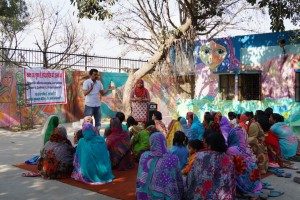
Surender Kumar of the Rann India Foundation teaches villagers about hepatitis B prevention in India.

Their campaign provides education, screening and immunization to people during village meetings, special events and cultural programs in 120 villages. “This helps us create a database of all the people in the area, we divide the screened people into two groups, one group that tests positive for hepatitis B and other with a negative result,” he said.

They sponsor immunization campaigns in collaboration with government programs and use donations from pharmaceutical companies for all who test negative for the hepatitis B surface antigen (HBsAg), which indicates they are not currently infected. They refer infected people to the local government hospital for treatment and monitoring. As part of the campaign, the initiative trains local peer educators who continue to raise awareness about hepatitis B after Kumar’s initial education campaign.

The need for this work is critical in India, and at first glance this appears to be an impossible task given the lack of awareness about how hepatitis B is spread and prevented and the enormity of the need. Despite the insurmountable odds, Kumar is intent on working to “defeat” hepatitis B in his country.

Instead of waiting for change, Kumar and Godara are hepatitis B heroes working to save lives and raise awareness. You can contact him by email at:surendersharma19817@gmail.com

 For another look at how people in India are fighting stigma and discrimination against people with hepatitis B, view Bollywood star Amitabh Bachchan’s video here.