On Tuesday, March 8, more than 120 advocates from across the U.S. fanned out on Capitol Hill to talk to their representatives about the importance of funding the Viral Hepatitis Division of the U.S. Centers for Disease Control and Prevention (CDC). Dozens of people laid their hearts on the line and told their stories about how they, their families, and friends have been touched by hepatitis.
In meetings with Congressional staff, and in some cases their senators, they shared stories about family members who discovered they had hepatitis B only when they were diagnosed with late-stage, inoperable liver cancer. Others talked about how lucky they were to have been immunized at birth, considering their mothers were infected. Courageous advocates described losing loved ones to hepatitis B and C spread through the heroin epidemic, and recalled indifferent healthcare workers who saw only addicts instead of human beings who had lost their battle with both addiction and hepatitis.
Our goal was to get our representatives to allocate more funding for CDC’s hepatitis division, which is sorely needed. It’s CDC’s job to investigate disease outbreaks and educate the public and healthcare providers about infectious disease. For example, CDC publishes a variety of reports and promotional materials to educate people how to protect themselves against hepatitis B and C. The agency also funds a “hepatitis coordinator” in nearly every state whose job it is to help prevent hepatitis, investigate outbreaks, and collect data—a Herculean task for just one person. Continue reading "“Hepatitis on the Hill” Advocates Fight for Hepatitis Prevention, And So Can You"→
Image courtesy of Praisaeng, at FreeDigitalPhotos.net.
If you have been diagnosed with chronic hepatitis B, your doctor has probably run several blood tests that show if the infection is harming your liver and identify what stage of infection you are in. Doctors consider all of these results when deciding if you need treatment and how often you should be monitored.
In this blog, we’ll examine how one of the tests — the HBV DNA or viral load test –can give you a snapshot into your hepatitis B infection and your health. The HBV DNA test is performed on a blood sample using a Polymerase Chain Reaction (PCR) technique that rapidly generates HBV DNA fragments so they can be measured. Today, viral load is usually measured using international units per milliliter (IU/mL). However, in the past it was measured in copies per milliliter (copies/mL), and in some regions and labs, it is still used.
If you ever need to convert copies into international units, there are about 5.6 copies in one international unit, so 5,000 copies/mL equals about 893 IU/mL. Remember to keep copies of your lab information on file so you can track your status. An Excel spreadsheet works great.
The sensitivity of HBV DNA tests may vary with each lab so it’s a good idea to use the same lab for your test. Labs usually measure down to less than 200 IU/mL. Below the threshold, the viral load is considered “undetectable” – something everyone with chronic hepatitis B wants to hear.
How HBV DNA results are presented mathematically on your lab report can be confusing. Because the amount of virus in the blood may be very high – in the millions or billions – the result may be displayed as an exponent or a log, rather than a whole number. You may need to convert these numbers to fully understand them.
What does viral load say about what stage of the virus you are in? Your viral load also varies over time depending on the “stage” of hepatitis B infection. That is why regular monitoring is so important.
Children and adults in the “immune tolerant” stage can have viral loads in the millions or even billions. It sounds scary, but it’s not unusual. Your viral load can remain very high for decades until your immune system begins attacking the virus. Most children and young adults who test positive for the hepatitis B “e” antigen (HBeAg) generally have high viral loads, though doctors typically don’t treat patients in this stage. Once their immune systems get rid of HBeAg and generate “e” antibodies (HBeAb), their viral loads begin to decline and liver enzymes (ALT/AST) normalize.
Adults with undetectable or low viral loads and no signs of liver damage are in an “inactive” stage. Adults with normal ALT (SGPT) levels, which usually indicate no current liver inflammation, and undetectable or viral loads less than 2,000 IU/mL generally do not require treatment. However, it is important to confirm with your doctor that there is no evidence of advanced liver disease. This phase may be lifelong, decades, or not long at all. That is why monitoring in this inactive phase remains important.
People in the “active” stage with elevated viral loads and signs of liver damage need treatment. These may be people that are HBeAg positive and unable to seroconvert and lose HBeAg and gain the antibody without experiencing significant liver damage. There may be a pattern of SGPT/ALT elevation that cycles up and down over time without mounting an adequate immune response to seroconvert. This can be dangerous, causing liver damage, which is why regular monitoring is key. You want to give your immune system the opportunity to try to mount an immune response and seroconvert but not at the expense of extensive liver damage. That’s why a knowledgeable doctor is so important!
Many people in their 40s, 50s or 60s, develop HBeAg-negative hepatitis B, though this may occur in younger individuals as well. Although individuals may have seroconverted and lost HBeAg (HBeAg negative/HBeAb positive), the virus is able to mutate allowing it to keep replicating, putting these patients at risk of liver damage. They may see the viral load start to creep up along with SGPT/ALT. Eventually they may require treatment with antivirals based on clinical guidelines doctors follow to manage their patients. Once again, monitoring is key!
Why is it important to measure HBV DNA during treatment? When daily antiviral pills (either tenofovir or entecavir) are prescribed, doctors measure your HBV DNA to see if the drug is working to reduce your viral load. Antivirals work by meddling with the viral DNA so the virus cannot reproduce effectively. Doctors measure your viral load to make sure the antiviral is working.
Why is measuring viral load important if you’re pregnant? Today, all pregnant women are screened for hepatitis B, and experts also want their viral loads to be measured. When pregnant women have high viral loads—exceeding 200,000 IU/mL—medical guidelines recommend antiviral therapy during their third trimester of pregnancy to reduce their risk of infecting their newborns. Babies born to HBV-infected women can become infected even if they are immunized at birth and treated with HBIG (hepatitis B antibodies) if their mothers have high viral loads.
It is important to remember that a viral load test provides you with important information, but it must be considered in relation to your other HBV and liver function tests results to determine if treatment is needed at all, or if you are responding favorably to current treatment. Although an undetectable or low viral load is good news, it does not necessarily guarantee that you have not, or will not experience liver damage. Hepatitis B is a tricky virus. Talk to your liver specialist about all of your test results.
Image courtesy of Graur Razvan Ionut at FreeDigitalPhotos.net.
If antiviral medications almost always lower viral loads, why don’t doctors treat young adults with high viral loads with this daily pill? After all, don’t high viral loads lead to liver damage and even liver cancer?
This is one of the most common questions posed to the Hepatitis B Foundation, and at first glance the decision not to treat a high viral load with antivirals seems counter-intuitive or plain wrong. If antivirals reduce the number of hepatitis B virus (HBV) in the body, won’t that give the immune system an opportunity to clear out the remaining residual HBV?
Unfortunately, it doesn’t work that way. It’s complicated, as are many aspect of hepatitis B.
It’s common for young adults (up to age 30) who live with hepatitis B to be in the “immune tolerant” stage of infection with extremely high viral load (HBV DNA) but with no signs of liver damage.
When we’re born to mothers infected with hepatitis B, unless we’re immunized at birth 90 percent of us become infected from exposure to infectious blood and body fluids during delivery. And when infants are infected, their immature immune systems don’t recognize the virus. The young immune system misses the “red flag” signature on this hepatitis B virus and “tolerates” the infection instead of attacking it.
In contrast, when we’re infected as healthy adults, our immune systems immediately detect and identify hepatitis B as a viral invader and aggressively attacks the virus and any infected liver cells. In adults, it generally can take up to six months for the immune system to eradicate the virus. When we’re infected as children, it can take up to three or even four decades for our immune systems to notice the virus and shift into “immune active” battle mode.
Until the immune systems notice the virus and begins to fight the infection, children and young adults remain in the “immune tolerant” stage, with sky high viral loads that can reach 1 billion international units per milliliter (IU/mL). Unencumbered by an immune system that’s on the offense, the virus hijacks liver cells to replicate and churn out more virus.
Because the immune system isn’t attacking and damaging the infected liver cells, liver tests (ALT or SGPT) results show no signs of damage and usually remain in the normal range (30 or less for men and 19 or less for women). And until our immune systems wake up and launches its attack, doctors say there is no reason to try to lower the viral load in these young adults because even when antivirals lower viral load, the immune system stays dormant and doesn’t go on the offensive.
Experts recently re-examined whether this hands-off approach was still valid and reviewed more than a dozen studies that examined whether antiviral treatment benefited immune-tolerant adults.
At the November 2015 AASLD Liver Conference, researchers reported, “There are no studies demonstrating that antiviral therapy is beneficial in reducing rates of liver cancer, cirrhosis, and liver-related death in persons with immune-tolerant chronic hepatitis B.”
Following their instruction to “first do no harm,” the experts recommended, “Given the lack of evidence of benefit to those with (high viral load and normal ALT levels), the potential harms of finite (or longer) antiviral therapy, including cost, antiviral drug side effects, and development of resistance, outweigh benefits.”
Let’s explore their rationale:
Antivirals work for only as long as you take them. Once started because of liver damage, patients can be on them for many years, and when patients go off antivirals, they often experience a “flare” with a sudden increase in viral load and ALT levels that can be dangerous.
The leading antivirals, including tenofovir (Viread) and entecavir (Baraclude), are not cheap, especially tenofovir which is not yet available in a generic formula.
And antivirals have side effects, which can include bone loss, impact on kidney function, and a risk of developing drug resistance.
So, if treatment will not yield good results, why put young adults through the cost and medical risk? In fact, experts don’t even treat immune-tolerant patients who have family members with hepatitis B-related liver cancer.
The experts did make clear that all immune-tolerant patients should have their ALT levels and viral load checked at least every six months so doctors could monitor their infection.
Still, this is challenging to hear when we are living with hepatitis B or just recently diagnosed with a chronic infection. We want to do something to fight the infection. But without an active immune system as a strategic partner in our fight against hepatitis B, we must be patient and let go of a quick-fix hope, as much as we all want a magic pill to cure our infection.
So in the interim, until our immune systems wake up and starting fighting the virus in our bodies, we do what we can to protect our health, including eating healthy foods, avoiding alcohol and cigarettes, and getting monitored every six months. It may not feel like it’s enough, but for now it’s all we can do.
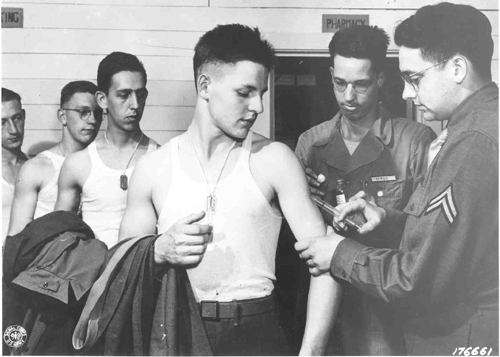
With Veterans Day comes reports about the lack of adequate mental health care for men and women returning from war. There is another, invisible health issue threatening veterans of all ages–hepatitis B.
Few veterans have ever been screened or treated for hepatitis B though their infection rate is four-times the national average.
The percentage of veterans infected with hepatitis B may actually be higher, but no one knows. Only 15 percent of U.S. veterans have ever been screened for hepatitis B. Among the few screened and diagnosed with chronic hepatitis B, only 25 percent have received antiviral treatment and only 13 percent have been screened for liver cancer. Continue reading "The Veterans Administration Ignores an Enemy on the Homefront: Hepatitis B"→
The longer we have hepatitis B, the higher our risk of developing liver cancer. With every decade of life, our liver cancer risk increases 2.7-times, according to a report on Viral Hepatitis in the Elderly published in the American Journal of Gastroenterology.
But current medical guidelines don’t spell out exactly when liver cancer testing should begin in many hepatitis B patients who don’t have liver damage (cirrhosis) or a family history of liver cancer, and are not of Asian or African descent.
Age is clearly an important factor when it comes to liver cancer, “… but current guidelines only provide age-specific recommendations for (liver cancer) surveillance in hepatitis B carriers of Asian ethnicity (men over age 40 and women over age 50),” a team of University of Miami and Veterans Affairs researchers wrote in the journal article. Continue reading "Your Doctor Not Screening You for Liver Cancer? Time for a Talk"→
Image courtesy of David Castillo Dominici at FreeDigitalPhotos.net
October is Liver Cancer Awareness Month. It may be a sleeper of a event when compared to other health campaigns, but for us who live with viral hepatitis, it’s an uncomfortable but critical reminder of the importance of monitoring our liver health to prevent cancer.
Viral hepatitis, especially B and C, are viral infections that can cause liver cancer (also called hepatocellular carcinoma or HCC.) Researchers are still studying why some people are more prone to liver cancer, but we who live with chronic hepatitis B or C have a 25 to 40 percent lifetime risk of developing liver cancer. The infection, which hijacks our liver cells to manufacture more virus, causes inflammation, scarring and even cancer as the liver cells grow out of control.
Dr. Ravi Jhaveri, an infectious disease specialist at the University of North Carolina at Chapel Hill School of Medicine, talks to parents.
Today, all pregnant women are routinely screened for hepatitis B, but a growing number of doctors say this single test doesn’t go far enough to protect the health of women and children.
In a commentary published in the medical journal Pediatrics, infectious disease specialist Dr. Ravi Jhaveri calls for a mandatory second test in pregnant women infected with hepatitis B. This test would measure the amount of hepatitis B virus (HBV) in her body (called viral load).
According to media headlines, a recent study apparently found that cancers are mainly caused by “bad luck.” But are the headlines accurate? And if so, do we just cross our fingers and hope for the best? Continue reading "Not Just Bad Luck"→